
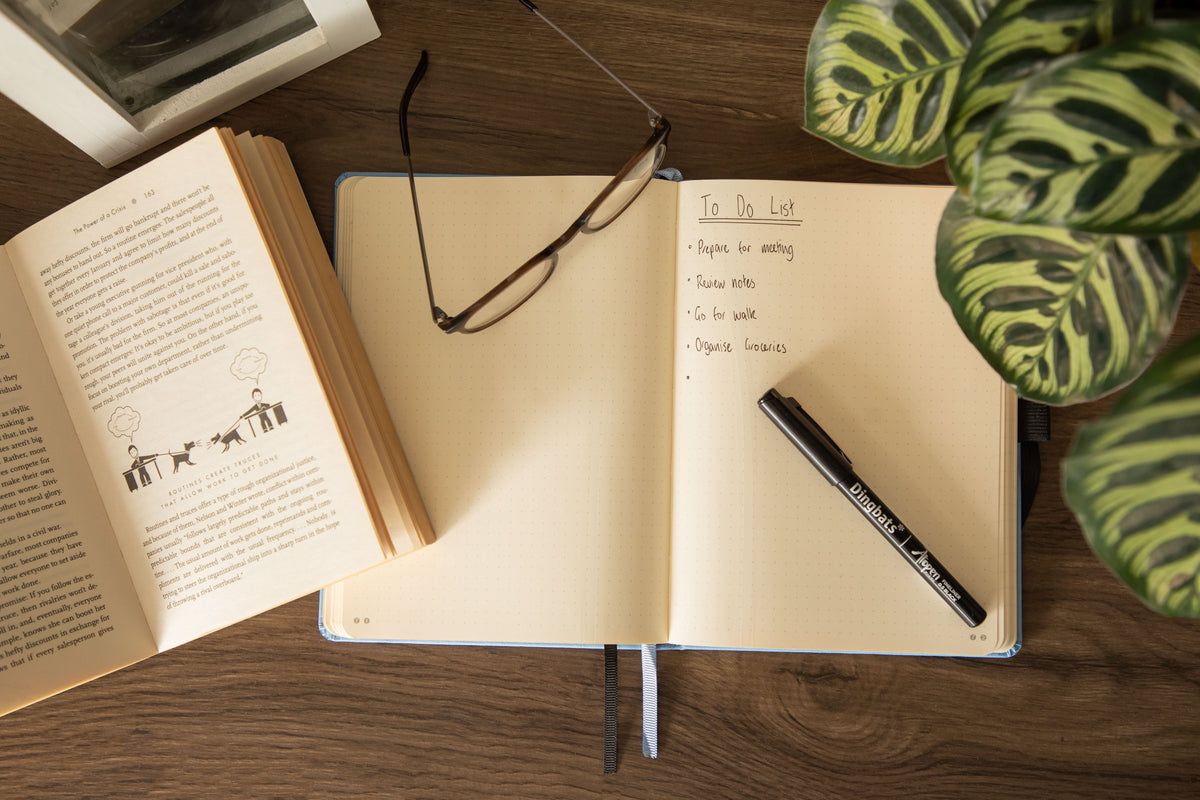
Last updated: September 2026 | A guide to blank-page fear, starting a new notebook, journaling, planning, creative notebooks, and Dingbats* notebooks
The first page of a new notebook can feel strangely powerful.
You open the cover.
The paper is clean.
The notebook still feels perfect.
Nothing has gone wrong yet.
No crossed-out words.
No uneven handwriting.
No messy list.
No abandoned idea.
No accidental ink mark.
And suddenly, writing the first line feels harder than it should. You bought the notebook to use it. You wanted the fresh start. You imagined the plans, notes, lists, sketches, journal entries, projects, or ideas it would hold. But now the first page is staring back at you.
What if the first line is ugly?
What if you choose the wrong purpose?
What if your handwriting looks bad?
What if the notebook is too nice for ordinary thoughts?
What if you ruin it?
This feeling is more common than people admit. A beautiful notebook can inspire you, but it can also make the first page feel intimidating. The nicer the notebook feels, the more pressure there is to make the beginning meaningful.
At Dingbats*, we believe notebooks are made to be used, not feared. A notebook becomes personal through writing, planning, sketching, listing, crossing out, taping in scraps, and filling pages over time. The first page does not need to be perfect. It simply needs to begin.
The first page is not a test. It is an invitation.
Quick Overview: Why the First Page Feels Difficult
| Reason | Why It Happens |
|---|---|
| Perfection pressure | A beautiful notebook feels too good to mess up |
| Too many possibilities | The notebook could become anything, which makes choosing hard |
| Fear of wasting it | You worry the idea is not important enough |
| Blank-page pressure | An empty page makes every mark feel too visible |
| Unclear purpose | You do not know what the notebook is for yet |
| Attachment to the object | The notebook feels special before it is used |
| Fear of inconsistency | You worry future pages will not match the first one |
| Starting feels official | The first page makes the notebook feel committed to one direction |
The first page feels hard because it carries too much expectation. The solution is not to make it perfect. The solution is to make it usable.
Why Beautiful Notebooks Can Feel Intimidating
The cover feels special.
The paper feels smooth.
The binding feels new.
The design feels intentional.
The notebook feels like it deserves something meaningful.
That is exactly why you chose it, but it is also why the first page can feel difficult. You may feel like the notebook needs to hold your best ideas, not your messy ones. You may wait for the right moment, the right pen, the right project, or the right mood.
But notebooks do not become meaningful by staying untouched. They become meaningful through use.
Why “Too Nice to Use” Happens
| Feeling | What It Means |
|---|---|
| “I do not want to ruin it” | You value the notebook and want the start to feel worthy |
| “I’ll wait for the right idea” | You are afraid of choosing the wrong purpose |
| “My handwriting is not good enough” | You are focusing on appearance before usefulness |
| “This page has to be special” | You are putting too much pressure on one page |
| “I’ll use it later” | The blank notebook has become safer than the used one |
A notebook is not ruined when it is used. It is activated.
The First Page Is Not the Whole Notebook
One reason the first page feels hard is that it seems to define everything. But it does not.
One imperfect first page does not ruin a notebook.
One messy list does not decide the future of every page.
One crossed-out word does not make the notebook less beautiful.
One ordinary thought does not waste good paper.
The first page is only one page. A notebook becomes itself over time.
What the First Page Does Not Need to Do
| It Does Not Need To | Why |
|---|---|
| Be beautiful | The notebook is for use, not display |
| Explain everything | The purpose can develop later |
| Match every future page | Notebooks naturally change |
| Be deeply meaningful | Ordinary beginnings are allowed |
| Use perfect handwriting | Real handwriting makes the notebook yours |
| Set a permanent system | You can adjust as you go |
| Impress anyone | The notebook belongs to you |
The first page does not need to carry the whole notebook. It only needs to open the door.
Why We Fear “Wasting” a Notebook
Many people hesitate to start a notebook because they worry the content is not important enough.
A grocery list feels too ordinary.
A rough sketch feels too messy.
A half-formed idea feels too unfinished.
A journal entry feels too emotional.
A to-do list feels too practical.
A random thought feels too small.
But notebooks are not wasted by ordinary use. Ordinary use is often what makes them valuable later.
A page with your daily list may bring back a routine.
A rough sketch may show where an idea began.
A messy plan may show what you were trying to build.
A quick note may become useful months later.
Things That Are Worth Writing in a Good Notebook
| Page Type | Why It Belongs |
|---|---|
| To-do lists | They show what life requires |
| Rough ideas | They are often the beginning of better ideas |
| Journal entries | They preserve thoughts and feelings |
| Sketches | They make ideas visible |
| Meeting notes | They capture decisions and details |
| Travel plans | They become memory records later |
| Reading notes | They save what stayed with you |
| Mistakes | They show process |
A notebook is not wasted when it holds real life. That is what it is for.
The Problem With Waiting for the Perfect Use
Waiting for the perfect use can keep a notebook blank for months or even years.
You save it for the “right project.”
Then the right project never feels important enough.
You save it for the “right season.”
Then the season passes.
You save it for “serious writing.”
Then ordinary notes go somewhere else.
The notebook stays perfect, but unused. That may feel safe, but it also prevents the notebook from becoming personal.
Why Waiting Does Not Help
| Waiting For | What Usually Happens |
|---|---|
| The perfect project | You delay starting |
| The perfect handwriting | You avoid real writing |
| The perfect system | You overthink the setup |
| The perfect mood | You only write rarely |
| The perfect first page | You never reach the second page |
| The perfect plan | You miss useful messy notes |
The notebook does not need to start with certainty. It can start with curiosity.
How to Make the First Page Easier
The easiest way to start a notebook is to lower the pressure of the first page. Do not treat it like a title page for your life. Treat it like a doorway. You can write something simple, functional, or even intentionally imperfect.
Easy First Page Ideas
| First Page Idea | Why It Works |
|---|---|
| Start date | Places the notebook in time |
| Your name | Creates ownership |
| A simple purpose | Gives direction without pressure |
| A messy pen test | Breaks the perfection barrier |
| A quote | Gives the page a soft beginning |
| A list of possible uses | Lets the notebook stay flexible |
| A “this notebook is allowed to be” page | Gives permission for imperfection |
| A table of contents | Useful for structured notebooks |
| A tiny sketch | Makes the page feel started |
| A first thought | Begins without overplanning |
The goal is not to make the first page impressive. The goal is to make the notebook less untouched.
The “Permission Page”
A permission page is one of the best ways to start a notebook. It tells the notebook what it is allowed to become. This is useful because many people unconsciously expect a new notebook to be neat, consistent, beautiful, and meaningful from page one. A permission page breaks that pressure.
Permission Page Template
| Prompt | Your Notes |
|---|---|
| This notebook is allowed to be | messy, useful, honest, unfinished |
| This notebook does not need to be | perfect, consistent, aesthetic, impressive |
| I am allowed to write | small ideas, ordinary lists, rough notes |
| I am allowed to cross out | mistakes, changes, old plans |
| I am allowed to use this for | whatever becomes useful |
| Date started |
This page can feel simple, but it changes the relationship with the notebook. It reminds you that use matters more than perfection.

The “Possible Uses” Page
A possible uses page is helpful when you do not know what the notebook should become yet. Instead of choosing one purpose immediately, write a list of what it could hold.
Possible Uses Page
| This Notebook Could Hold |
|---|
| Work notes |
| Journal entries |
| Reading notes |
| Travel plans |
| Creative ideas |
| Sketches |
| Lists |
| Routines |
| Goals |
| Quotes |
| Meeting notes |
| Project notes |
| Memories |
This page keeps the notebook open. You are not locking it into one identity before you begin. You are letting the purpose develop through use.
The “Start Anywhere” Page
Sometimes the first page should be deliberately ordinary.
Write today’s date.
Write what you need to do.
Write one thought.
Write the pen you are using.
Write what you can see from where you are sitting.
Write one thing you do not want to forget.
That is enough.
Start Anywhere Prompts
| Prompt | Example |
|---|---|
| Today I need to remember | A task, appointment, or idea |
| Right now I am thinking about | A project, feeling, or question |
| This notebook is starting with | A list, plan, sketch, or note |
| The first thing I want to write is | Anything that comes to mind |
| I do not know what this notebook is yet, but | It can begin here |
| One small thing from today | A moment, object, detail, or thought |
The first page does not need a grand opening. A small beginning is still a beginning.
Why Messy Pages Make Notebooks More Personal
A perfect notebook can be beautiful, but a messy notebook often feels more alive.
The crossed-out word shows change.
The uneven heading shows speed.
The scribbled margin shows thought in motion.
The taped-in receipt shows life.
The rough sketch shows the beginning of an idea.
The unfinished list shows reality.
Messiness is not failure. It is evidence that the notebook is being used.
What Messy Pages Can Show
| Messy Detail | What It Means |
|---|---|
| Cross-outs | Revision, correction, thinking |
| Arrows | Connections forming |
| Uneven handwriting | Real pace and mood |
| Half-finished lists | Life changing |
| Scribbles | Testing, processing, doodling |
| Notes in margins | Extra thoughts |
| Taped-in scraps | Memory and context |
| Rewritten titles | Ideas developing |
A notebook becomes personal when it stops trying to stay untouched.
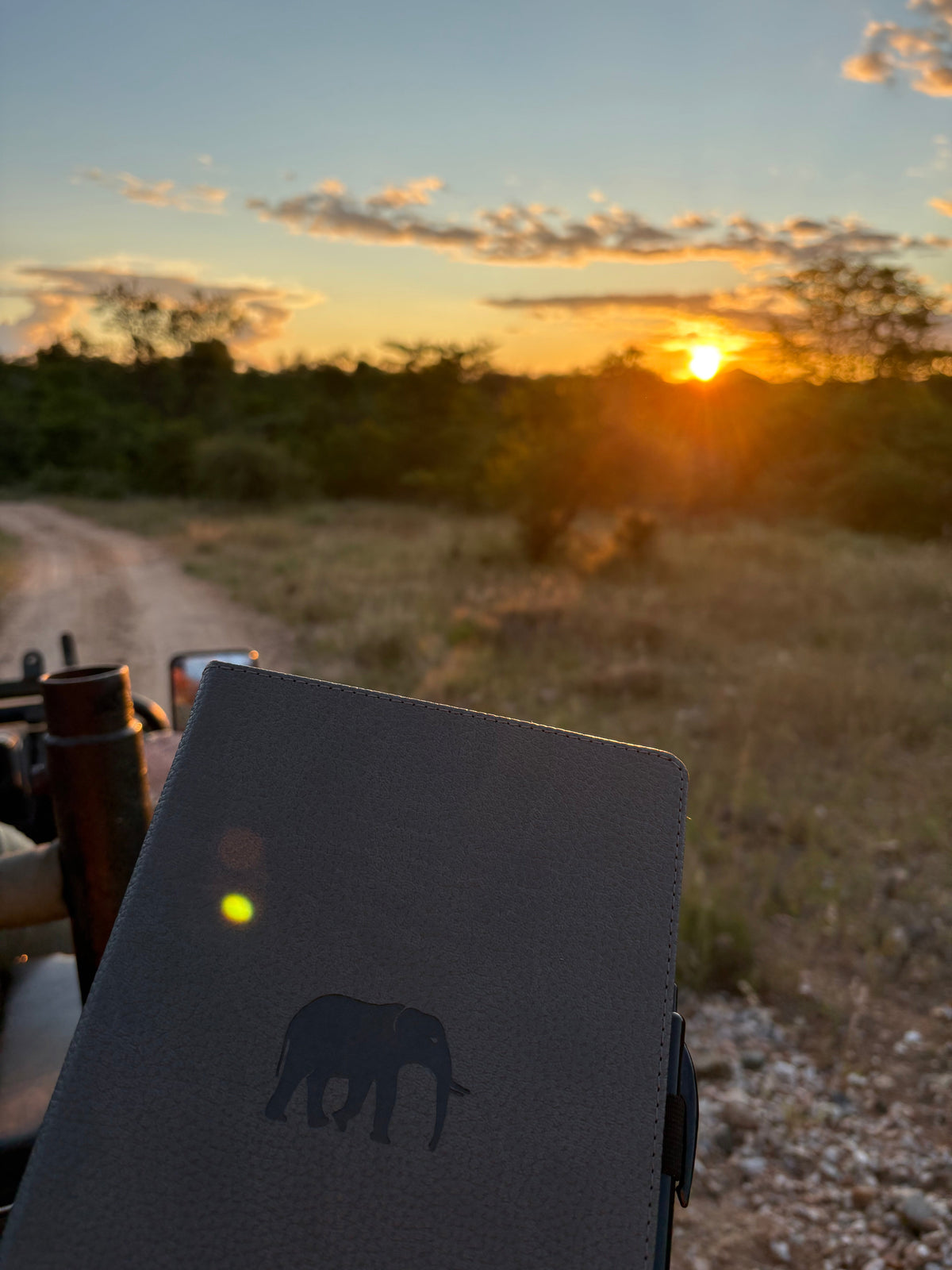
The First Page for a Wildlife Notebook
You do not have to be literal. You can simply ask: why did this cover call to me?
Wildlife First Page Ideas
| Prompt | Your Notes |
|---|---|
| Animal on the cover | |
| Why I chose this animal | |
| What this notebook will hold | |
| The mood I want this notebook to have | |
| A place I imagine using it | |
| Date started |
A whale notebook might become a place for reflection.
A tiger notebook might become a bold project notebook.
A deer notebook might become a quiet observation journal.
A duck notebook might become a travel notebook.
The animal does not decide the notebook’s purpose. But it can make the first page feel more personal.

The First Page for an Earth Notebook
Instead of trying to make it beautiful, make it functional.
Earth First Page Ideas
| First Page | Best For |
|---|---|
| Index | Finding important pages later |
| Key | Symbols, colors, or categories |
| Year overview | Long-term planning |
| Monthly map | Organizing the current month |
| Goals page | Setting direction |
| Routine tracker | Building consistency |
| Future log | Planning ahead |
| “How I’ll use this notebook” page | Clarifying purpose |
The Earth Collection works well when the first page becomes a map. Not a perfect introduction. A useful starting point.

The First Page for a Pro Notebook
A Pro notebook can begin with tests.
Pen tests.
Marker tests.
Brush pen strokes.
Color swatches.
A small sketch.
A rough moodboard.
A messy title list.
A page of shapes.
Pro First Page Ideas
| First Page | Why It Works |
|---|---|
| Pen test page | Breaks the blank-page fear |
| Brush pen strokes | Gets your hand moving |
| Color swatches | Makes the notebook feel creative |
| Shape page | Starts visually without pressure |
| Mini moodboard | Sets creative direction |
| Sketch warm-up | Lowers the expectation of perfect art |
| Project title page | Gives the notebook a creative role |
| Mixed media test | Helps you understand the paper |
The first page of a Pro notebook does not need to be your best work. It can be your warm-up.

The First Page for a Guided Journal
Guided journals make the first page easier because they give you structure. Instead of facing a completely blank page, you are given prompts, sections, logs, or categories.
That structure can reduce hesitation.
A Reading Journal invites you to begin with your reading life.
A Dream Journal invites you to record what your mind remembers from sleep.
A Baby Memory Journal begins with family memories.
A Wedding Anniversary Journal begins with shared milestones.
Why Guided Journals Help
| Guided Feature | Why It Reduces Pressure |
|---|---|
| Prompts | You do not need to invent the first line |
| Sections | The purpose is already clear |
| Logs | Easy to begin with simple information |
| Review pages | Reflection has a place |
| Trackers | Progress is visible |
| Memory pages | The notebook already knows what it is for |
Guided journals are helpful when the question is not “What should this notebook be?” The structure has already answered.
What to Avoid on the First Page
There is no wrong way to start a notebook, but some habits can make the first page feel harder than it needs to.
First Page Mistakes
| Mistake | Better Approach |
|---|---|
| Trying to make it perfect | Make it useful |
| Waiting too long | Start with something small |
| Choosing a complicated system | Begin simply and adjust later |
| Saving the first page forever | Use it as a doorway |
| Comparing it to online notebook pages | Let it fit your real life |
| Restarting because of one mistake | Keep going |
| Making the purpose too narrow | Leave room for change |
| Using a pen you do not trust | Start with a pen you enjoy |
The first page should make the second page easier. That is its job.
How to Recover From a “Bad” First Page
Maybe you already started and hate the first page. That is fine. A bad first page is not a ruined notebook.
You can:
- turn the page and continue
- cover part of it with a note or paper
- turn it into a title page
- add a sticker, scrap, or quote
- write “started messy, continuing anyway”
- use it as a pen test page
- make it a reminder that the notebook is for real use
Bad First Page Recovery Ideas
| Problem | Fix |
|---|---|
| Bad handwriting | Add a title or continue on the next page |
| Wrong purpose | Rewrite the notebook purpose later |
| Ink mistake | Turn it into a test page |
| Ugly layout | Add a border, label, or note |
| Too much pressure | Write a permission page next |
| Page feels wasted | Use it as evidence that you started |
The best way to fix a bad first page is to fill more pages. One page matters less once the notebook has a life.
Why the Second Page Is Usually Easier
The second page is easier because the spell is broken.
The notebook is no longer untouched.
The first mark already exists.
The pressure has lowered.
The object has started becoming yours.
That is why beginning matters so much. Not because the first page is important on its own, but because it helps the notebook become usable.
What Changes After the First Page
| Before Starting | After Starting |
|---|---|
| The notebook feels too perfect | It feels usable |
| Every mark feels risky | Writing feels more natural |
| Purpose feels uncertain | Direction starts to form |
| Mistakes feel scary | Mistakes become normal |
| The notebook feels separate from you | It starts to feel yours |
A notebook becomes less intimidating the moment it becomes active.
First Page Ideas by Purpose
Different notebooks need different beginnings.
First Page Guide
| Notebook Purpose | First Page Idea |
|---|---|
| Personal journal | Date, intention, permission page |
| Work notebook | Name, role, project list, meeting key |
| Travel notebook | Destination list, packing notes, map sketch |
| Reading notebook | Current reading list or favorite quote |
| Creative notebook | Pen test, idea bank, moodboard |
| Planning notebook | Index, key, monthly overview |
| Sketch notebook | Warm-up shapes or tool tests |
| Memory notebook | Start date and what this notebook will remember |
| Project notebook | Project brief and first next step |
The first page should serve the notebook’s purpose, not perform for anyone else.
A Simple First Page Template
Use this when you want a clean but low-pressure start.
First Page Template
| Prompt | Your Notes |
|---|---|
| Date started | |
| This notebook is for | |
| I chose this notebook because | |
| This notebook is allowed to be | |
| First thing I want to write down | |
| One thing I hope this notebook helps with |
This is enough. A notebook does not need a dramatic beginning to become meaningful.
A First Page for People Who Hate First Pages
Write this:
“This notebook is now started.”
Then write the date.
That is all. Turn the page. Begin. Sometimes the best first page is the one that gets out of the way.
Frequently Asked Questions
Why is it hard to start a new notebook?
It is hard to start a new notebook because the blank first page can create pressure. You may worry about ruining the notebook, choosing the wrong purpose, making mistakes, or not writing something meaningful enough.
What should I write on the first page of a notebook?
You can write the date, your name, the notebook’s purpose, a simple intention, a permission page, a quote, a list of possible uses, a pen test, or one small thought from the day.
How do I stop being afraid to ruin a notebook?
Start with a low-pressure page. Use the first page for a pen test, permission page, messy list, or simple date. Remind yourself that notebooks become meaningful through use, not perfection.
Should the first page of a notebook be special?
It can be special, but it does not have to be. The first page only needs to help you begin. The notebook will become meaningful through all the pages that follow.
What if I mess up the first page?
Keep going. One messy first page does not ruin a notebook. You can cover it, turn it into a test page, add a note, or simply continue on the next page.
Which Dingbats* notebook is best if I am afraid to start?
The Wildlife Collection is great if you want a notebook with personality that feels personal from the start. The Earth Collection is helpful if structure makes starting easier. The Pro Collection is ideal if you want to begin with pen tests, sketches, swatches, and creative warm-ups.

Leave a comment
All comments are moderated before being published.
This site is protected by hCaptcha and the hCaptcha Privacy Policy and Terms of Service apply.