
Last updated: September 2026 | A guide to paper feel, notebook texture, premium notebooks, writing experience, cream paper, mixed media paper, and Dingbats* notebooks
A notebook is not only something you look at. It is something you feel.
You feel the cover before you open it.
You feel the page under your hand.
You feel the pen moving across the surface.
You feel the weight of the notebook in your bag.
You feel whether the page lies flat or fights back.
You feel whether the paper is thin, slippery, rough, soft, substantial, or satisfying.
That is why two notebooks can look similar online but feel completely different in real life. The writing experience is sensory.
It is touch, sound, weight, movement, pressure, texture, color, and comfort. It is the difference between paper that feels disposable and paper that makes you want to slow down for a moment. It is the reason people return to one notebook again and again, even when they have others sitting unused.
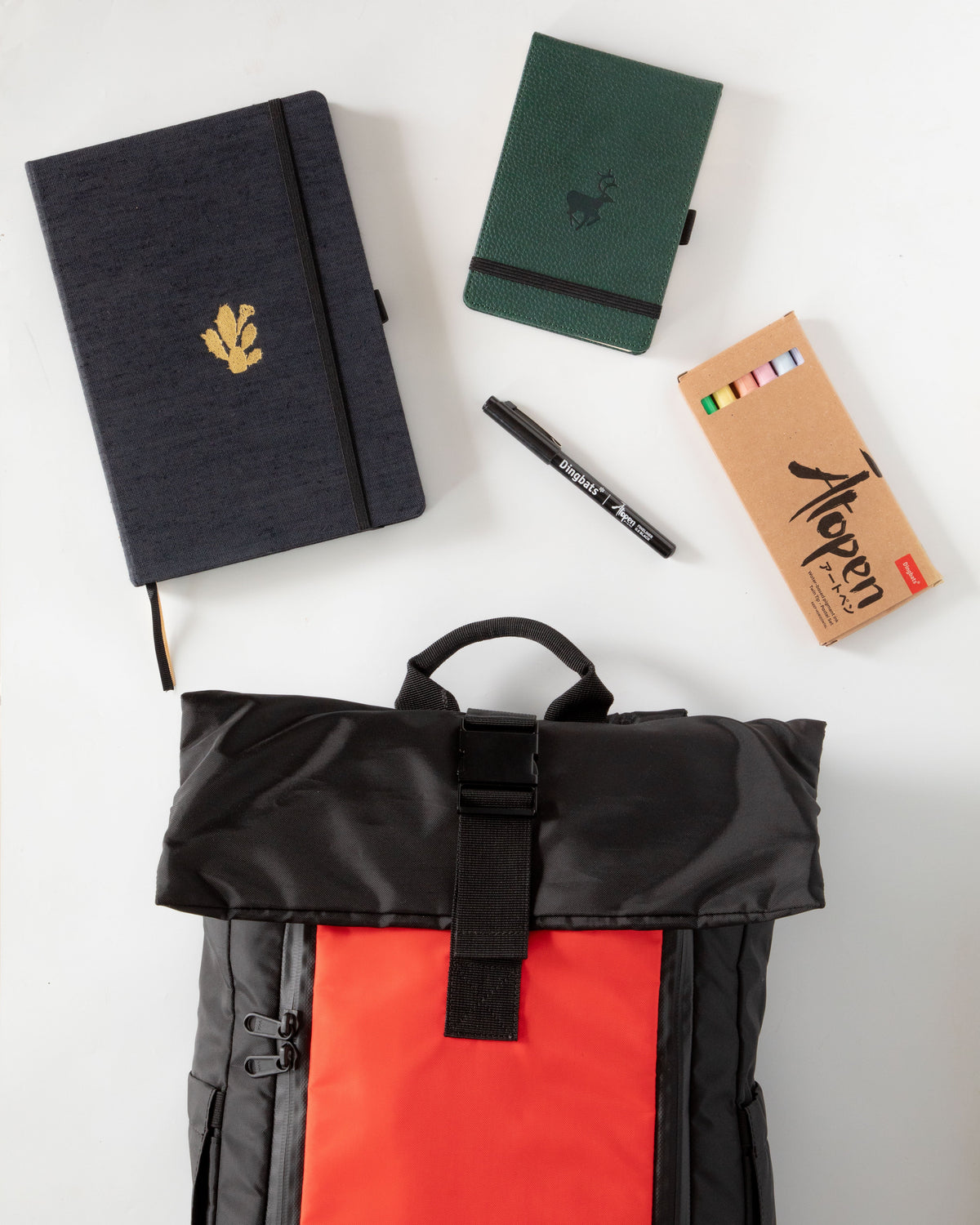
At Dingbats*, this matters because our notebooks are designed to be used with the senses, not only judged by specifications. The Wildlife Collection and Earth Collection use 100gsm cream paper that feels smooth, warm, and substantial for everyday writing. The Pro Collection uses 160gsm mixed media paper for sketching, visual thinking, brush pens, markers, light washes, and creative work. The covers, debossed details, lay-flat construction, pockets, bookmarks, and pen loops all add to the feeling of using the notebook.
A good notebook does not only hold your writing. It changes how writing feels.
Quick Overview: What Makes a Notebook Feel Good?
| Element | Why It Matters |
|---|---|
| Paper texture | Changes how the pen moves across the page |
| Paper weight | Affects thickness, durability, and how substantial the page feels |
| Page color | Cream paper can feel warmer and softer than bright white paper |
| Cover texture | Makes the notebook feel more tactile and memorable |
| Binding | Affects whether the notebook opens comfortably |
| Lay-flat design | Makes writing easier across the full page |
| Page sound | Adds to the physical experience of turning pages |
| Size and weight | Changes how portable, serious, or spacious the notebook feels |
| Details | Bookmarks, pockets, pen loops, and elastic closures make use smoother |
| Purpose | Writing, planning, sketching, and mixed media all need different paper experiences |
A notebook can be practical and emotional at the same time. The feeling is part of the function.
Why Paper Feel Matters
Some paper feels too thin.
Some feels too rough.
Some feels too glossy.
Some feels too slippery.
Some makes the pen drag.
Some makes ink look dull.
Some feels soft, smooth, and substantial enough to enjoy writing on.
Paper feel matters because writing is physical. Your hand is moving. The pen is touching the page. The page is taking pressure, ink, rhythm, and speed. If the paper feels unpleasant, writing becomes less inviting. If the paper feels good, the notebook becomes easier to return to.
What Good Paper Feel Can Create
| Feeling | Why It Helps |
|---|---|
| Smoothness | Makes writing feel easier and more fluid |
| Substance | Makes the page feel less flimsy |
| Warmth | Makes the writing experience feel softer and more inviting |
| Control | Helps the pen feel steady on the page |
| Comfort | Makes longer writing sessions more enjoyable |
| Confidence | Makes the page feel worth using |
| Pleasure | Encourages you to keep writing |
Paper is not just the background. It is part of the writing experience.

The Difference Between Looking Good and Feeling Good
A notebook can look beautiful but feel disappointing.
The cover may photograph well.
The color may be attractive.
The layout may look clean.
The product image may seem premium.
But once you open it, the real test begins.
Does the paper feel good under the pen?
Does the page feel too thin?
Does the notebook open comfortably?
Does your hand rest naturally?
Does the cover feel pleasant to hold?
Does the notebook feel like something you want to use, not just own?
Looking Good vs Feeling Good
| Looks Good | Feels Good |
|---|---|
| Attractive cover | Cover feels satisfying to hold |
| Clean pages | Paper feels smooth and substantial |
| Nice product photo | Notebook works in real use |
| Stylish design | Details support daily writing |
| Premium appearance | Premium experience |
| Beautiful when unused | Better once used |
Why Cream Paper Feels Different
Page color changes the atmosphere of a notebook. Bright white paper can feel clean, sharp, and high contrast. That may work well for some uses, but it can also feel harsh or clinical depending on the notebook.
Cream paper feels different, like the Dingbats* Wildlife and Earth Collections. It often feels warmer, softer, and more relaxed. It can make the page feel less stark and more inviting, especially for journaling, planning, reading notes, long writing sessions, and personal reflection.
Why Cream Paper Appeals to Many Writers
| Cream Paper Quality | Why It Matters |
|---|---|
| Softer appearance | The page can feel gentler and less harsh |
| Warm tone | Creates a more personal writing atmosphere |
| Classic notebook feel | Feels familiar and timeless |
| Comfortable contrast | Writing feels clear without feeling overly sharp |
| Better emotional tone | Works well for journaling, memory keeping, and reflection |
The color of the page affects the mood of the page.

Why Paper Weight Matters
Paper weight changes how a notebook feels immediately. Thin paper can feel light and practical, but it may also feel fragile. Heavier paper can feel more substantial, more durable, and more satisfying, especially if you use pens, markers, sketches, or layered notes.
Paper weight also affects how confidently you use the page. If the paper feels too delicate, you may hesitate. If the paper feels strong enough for your tools, you are more likely to write, sketch, underline, circle, test, and create freely.
Paper Weight and Use
| Paper Feel | Best For |
|---|---|
| Lightweight paper | Quick notes, portability, high page count |
| Medium-weight paper | Everyday writing, journaling, planning, lists |
| Heavier paper | Sketching, markers, brush pens, visual notes, mixed media |
| Mixed media paper | Creative work, layering, light washes, moodboards |
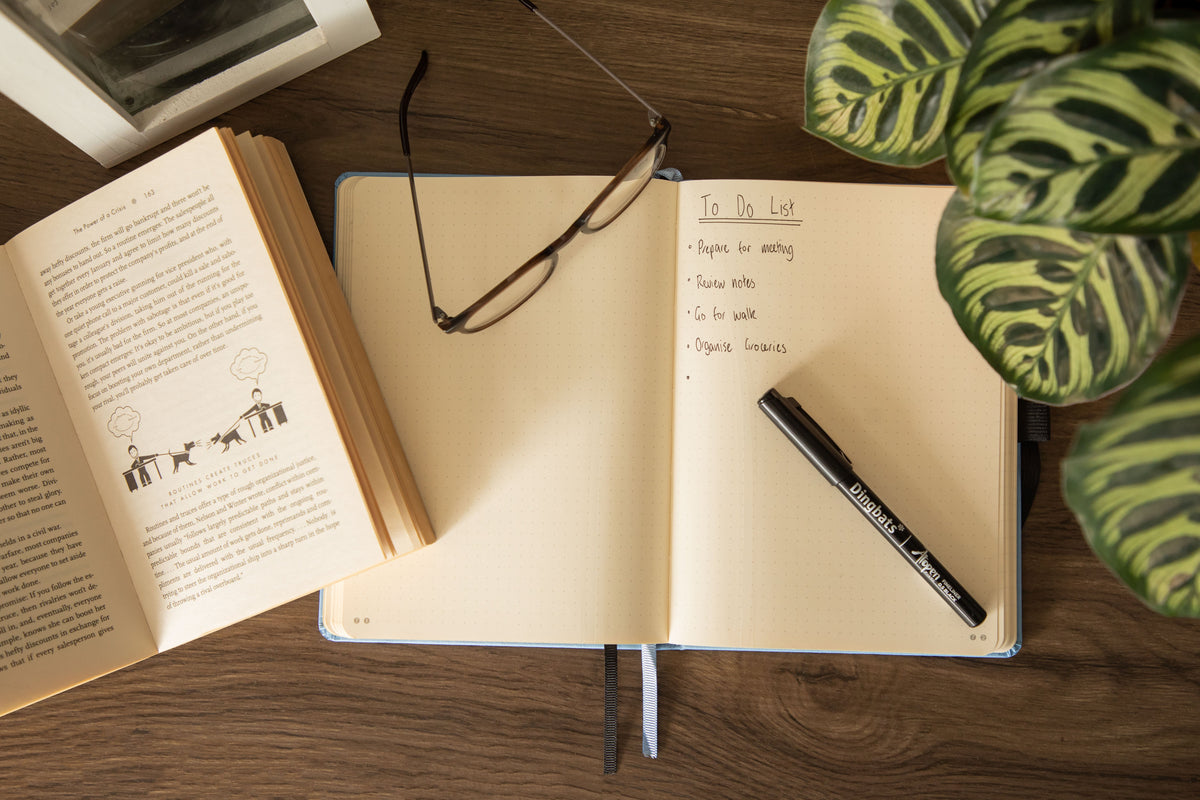
The Wildlife Collection and Earth Collection use 100gsm paper for everyday writing and journaling.
The Pro Collection uses 160gsm mixed media paper for creative work that needs more strength.
Different notebooks should feel different because they serve different kinds of writing.
What “Substantial” Paper Means
When people describe paper as substantial, they usually mean it feels like it has presence.
It does not feel flimsy.
It does not feel disposable.
It does not feel like the page will give up under the pen.
It has enough weight to feel trustworthy.
Substantial paper can make the act of writing feel more intentional. The page feels ready to hold something. This does not mean every notebook needs the heaviest paper possible. A daily writing notebook should still be comfortable, flexible, and practical. But the paper should feel strong enough to support the way you use it.
Substantial Paper Can Make a Notebook Feel
| Quality | Meaning |
|---|---|
| More premium | The page feels considered |
| More durable | The notebook feels made to be used |
| More satisfying | Writing feels smoother and fuller |
| More reliable | You trust the page with different pens |
| More intentional | The notebook feels less disposable |
Paper does not need to be thick for the sake of thickness. It needs to suit the purpose of the notebook.
Why Pen Movement Matters
A good notebook changes how your pen feels.
Some paper makes the pen glide quickly.
Some gives more feedback.
Some slows the hand slightly.
Some makes lines look clean.
Some makes writing feel scratchy or uneven.
The right paper feel depends on the writer, the pen, and the purpose. Someone writing daily lists may want smooth, comfortable movement. Someone sketching may want paper that can take more pressure and layering. Someone using brush pens may want a surface that supports expressive marks.
Pen Movement Affects
| Writing Detail | Why It Matters |
|---|---|
| Speed | Smooth paper can make writing feel more fluid |
| Control | Slight texture can help the hand feel steady |
| Pressure | Stronger paper handles firmer writing better |
| Line quality | Good paper helps ink appear cleaner |
| Comfort | Better pen movement reduces frustration |
| Enjoyment | The notebook becomes more pleasant to use |
People may buy a notebook for the cover. But they keep using it because of how the pen feels on the page. Check out the Dingbats* Ātopens!

Why Texture Makes a Notebook Memorable
Texture creates memory.
A smooth cover.
A debossed animal.
A fabric surface.
A soft page.
A thicker sheet.
A slightly raised detail.
A cover that feels different from everything else on your desk.
These tactile details make a notebook more memorable because they create a physical relationship with the object. You do not only see the notebook. You recognize it by touch.
Texture Can Come From
| Notebook Detail | Sensory Effect |
|---|---|
| Debossed cover | Adds depth and physical detail |
| Fabric cover | Creates warmth and softness |
| Cream paper | Makes the page feel gentler |
| Paper thickness | Adds substance |
| Elastic closure | Adds a repeated hand movement |
| Bookmark ribbon | Adds function and familiarity |
| Expandable pocket | Adds interaction and memory |
| Lay-flat binding | Adds comfort during use |
Texture is part of why some notebooks feel personal before they are full. The object already has character.
The Cover Is Part of the Writing Experience
The cover is not only decoration. It is the first part of the notebook you touch. It affects how the notebook feels in your hands, how it looks on your desk, how it travels, and how emotionally connected you feel to it. A cover can make a notebook feel serious, creative, warm, bold, calm, natural, premium, or personal. This matters because the cover helps set the tone before the first word is written.
What a Cover Can Communicate
| Cover Feature | Feeling |
|---|---|
| Animal motif | Character and personality |
| Earth tone | Calm and grounded structure |
| Textile cover | Creative, tactile, premium |
| Debossing | Craft, detail, depth |
| Soft touch | Warmth and comfort |
| Minimal design | Focus and simplicity |
| Bold motif | Energy and identity |
The Dingbats* Wildlife Collection uses animal covers to create character.
The Earth Collection uses a more structured, planning-friendly identity.
A cover is not the whole notebook. But it begins the relationship.
Why Lay-Flat Design Changes the Feel of Writing
A notebook that does not open comfortably can interrupt writing.
You hold one side down.
You fight the spine.
You avoid the inner edge.
You press harder than you want to.
You write only on the “easy” side.
You lose the flow of the page.
A lay-flat notebook feels different because the notebook works with your hand instead of against it. It lets you write across more of the page, use spreads more comfortably, and keep your attention on the writing rather than the binding.
Why Lay-Flat Matters
| Benefit | Why It Improves Use |
|---|---|
| Easier writing | The page stays open more comfortably |
| Better use of space | You can write closer to the center |
| More natural spreads | Useful for planning, sketching, and visual notes |
| Less hand strain | You do not need to hold the notebook down as much |
| Better creative flow | The page feels more open |
Why Page Turning Feels Important
Page turning is a small part of the notebook experience, but it matters.
The sound of the page.
The thickness between your fingers.
The way the paper moves.
The feeling of reaching a fresh spread.
The sense of progress as the notebook fills.
These details create rhythm. A notebook is not only used one page at a time. It is experienced through the movement from page to page.
What Page Turning Adds
| Sensory Detail | Why It Matters |
|---|---|
| Paper sound | Makes the notebook feel physical |
| Page thickness | Adds satisfaction and substance |
| Fresh spread | Creates a sense of restart |
| Filled pages | Shows progress |
| Ribbon bookmark | Makes return easier |
| Page edges | Add tactile identity |
The more satisfying a notebook feels to move through, the more likely you are to keep returning to it.
Why Size and Weight Change the Experience
A notebook’s size changes how you use it.
A smaller notebook feels portable and quick.
An A5-style notebook feels balanced for everyday writing.
A larger notebook feels more spacious and serious.
A B5 creative notebook gives more room for sketching, planning, and visual thinking.
Weight also matters.
A notebook that feels too heavy may stay at home.
A notebook that feels too light may not feel substantial enough for certain work.
The right balance depends on how and where you use it.
Notebook Size and Sensory Use
| Notebook Feel | Best For |
|---|---|
| Small and portable | Quick notes, travel, daily carry |
| Medium and balanced | Journaling, planning, work notes |
| Larger and spacious | Creative work, sketching, diagrams |
| Heavier and substantial | Studio, desk, serious projects |
| Lighter and flexible | Everyday movement |
The Pro Collection uses a larger B5 format because creative work needs more space.
The Wildlife and Earth formats suit everyday writing, planning, journaling, and notes.
The size of a notebook changes the kind of thoughts it invites.

Why Details Make a Notebook Easier to Use
Small details can change the entire experience.
A bookmark helps you return to your place.
A pocket holds loose notes, tickets, receipts, or scraps.
An elastic closure keeps the notebook together.
A pen loop keeps your writing tool close.
Perforated pages make removal cleaner when needed.
Numbered pages and indexes help structure become easier to manage.
These features may seem minor, but they reduce friction. A notebook feels better when it supports real use.
Notebook Details That Matter
| Detail | Why It Helps |
|---|---|
| Bookmark | Makes return easier |
| Elastic closure | Keeps the notebook secure |
| Pen loop | Keeps your pen with the notebook |
| Expandable pocket | Holds loose papers and memory scraps |
| Perforated pages | Makes page removal cleaner |
| Index | Helps organize important pages |
| Numbered pages | Makes notes easier to reference |
| Lay-flat binding | Makes writing more comfortable |
Premium does not only mean beautiful. It means thoughtful.
Why “Good Paper” Depends on the Purpose
There is no single best paper for every notebook. A journal, sketchbook, abd mixed media notebook do not all need the same paper. Good paper is paper that matches the purpose.
Different Uses Need Different Paper Experiences
| Use | Paper Need |
|---|---|
| Journaling | Smooth, comfortable, warm, pleasant for longer writing |
| Planning | Clear, reliable, structured, easy to write on daily |
| Reading notes | Comfortable for quotes, reviews, and reflections |
| Meeting notes | Practical, smooth, easy to scan |
| Sketching | Stronger paper with space for pressure and marks |
| Mixed media | Heavier paper that can handle more tools |
| Creative research | Paper that supports writing, sketching, and visual tests |
This is why Dingbats* collections are not all the same.
The Wildlife Collection supports everyday personal writing.
The Earth Collection supports structured planning and routines.
The Pro Collection supports heavier creative use.
Each collection should feel different because each one is built for a different kind of page.
The Wildlife Collection: Warm Everyday Writing
The Dingbats* Wildlife Collection is designed for everyday writing with personality.
The animal-inspired covers give each notebook character, while the 100gsm cream paper supports journaling, lists, reading notes, personal reflections, work notes, and travel writing.
Why Wildlife Feels Good to Use
| Feature | Sensory Benefit |
|---|---|
| Animal cover | Gives the notebook identity and character |
| 100gsm cream paper | Feels warm, smooth, and substantial for daily writing |
| Tactile cover details | Makes the notebook memorable to hold |
| Everyday formats | Makes the notebook useful for different routines |
| Bookmark | Helps you return to your place |
| Expandable pocket | Holds loose notes, tickets, and scraps |
| Elastic closure | Keeps the notebook secure |
Wildlife is for people who want everyday writing to feel personal. It is practical, but it is not anonymous.

The Earth Collection: Smooth Structure for Planning
The Dingbats* Earth Collection is designed for people who like structure.
It supports planning, routines, trackers, goals, indexes, collections, reviews, and organized notes. The sensory experience matters here because planning is repetitive. If a notebook feels good to open, write in, and return to, the routine becomes easier to maintain.
Why Earth Feels Good to Use
| Feature | Sensory Benefit |
|---|---|
| 100gsm cream paper | Warm and comfortable for daily planning |
| Dotted layout | Flexible without feeling restrictive |
| Numbered pages | Helps structure feel easier |
| Index and key | Supports long-term organization |
| Smooth writing experience | Makes daily use more inviting |
| Cover identity | Makes planning feel less clinical |
| Practical details | Helps the notebook function as a system |
Earth is for people who want their planning notebook to feel useful, warm, and organized. Structure does not have to feel cold.

The Pro Collection: A More Creative Paper Experience
The Dingbats* Pro Collection is designed for a different sensory experience.
It is larger.
It is more spacious.
It uses 160gsm mixed media paper.
It opens flat.
It has a textile cover.
It gives creative work more room.
This makes Pro feel less like an everyday notebook and more like a creative workspace.
Why Pro Feels Different
| Feature | Sensory Benefit |
|---|---|
| 160gsm mixed media paper | Feels strong, substantial, and creative |
| B5 size | Gives more room for sketches and visual thinking |
| Lay-flat design | Makes spreads easier to use |
| Textile cover | Adds tactile warmth and premium feel |
| Nature motifs | Gives each notebook visual identity |
| Mixed media support | Encourages sketches, brush pens, markers, and light washes |
| Spacious pages | Supports moodboards, diagrams, and creative research |
Pro is for people who need the page to do more than hold words. It is made for thinking that becomes visual.

Why Sensory Quality Encourages Consistency
A notebook that feels good is easier to use consistently. This does not mean a notebook can do the work for you. But it can reduce resistance. If you enjoy opening it, touching the paper, using your pen, turning the page, and returning to your place, you are more likely to keep using it.
Sensory Quality Helps Because It Creates
| Feeling | Why It Matters |
|---|---|
| Enjoyment | You want to return to the notebook |
| Comfort | Longer writing feels easier |
| Familiarity | The notebook becomes part of routine |
| Trust | You know how the paper responds |
| Attachment | The object becomes personal |
| Momentum | Filled pages encourage more pages |
A notebook is a habit object. The better it feels to use, the more naturally it becomes part of your day.
Why Premium Notebooks Feel Different
A premium notebook is not only about price. It is about the full experience.
The cover.
The paper.
The binding.
The page color.
The details.
The way it opens.
The way it feels in your hand.
The way it handles your writing tools.
The way it becomes more personal over time.
A premium notebook should feel considered from the outside in.
What Makes a Notebook Feel Premium
| Element | What It Adds |
|---|---|
| Good paper | Better writing experience |
| Strong binding | More comfortable use |
| Thoughtful cover | Visual and tactile identity |
| Smooth page feel | Enjoyable pen movement |
| Useful features | Less friction in daily use |
| Durable construction | Confidence and longevity |
| Purposeful design | The notebook feels intentional |
| Emotional connection | It becomes worth keeping |
Premium is not only how a notebook looks unused. It is how it performs after weeks or months of real life.
How to Choose a Notebook by Feel
When choosing a notebook, do not only ask what it looks like. Ask how it will feel to use.
Questions to Ask Before Choosing
| Question | Why It Helps |
|---|---|
| Will I write in this daily or occasionally? | Helps decide paper and format |
| Do I prefer structure or freedom? | Helps choose Earth, Wildlife, or Pro |
| Do I use pens, markers, brush pens, or pencils? | Helps choose paper weight |
| Do I need portability or space? | Helps choose size |
| Do I want warm cream pages or a different page feel? | Helps match writing mood |
| Will I sketch or only write? | Helps decide if Pro is better |
| Do I want a notebook with character? | Helps choose Wildlife or nature motifs |
| Do I need planning features? | Helps choose Earth |
The best notebook is the one that matches your hand, your tools, and your routine.
A Paper Feel Test Page
When you start a new notebook, use one page to understand how it feels. This is especially useful if you use different pens or creative tools.
Paper Feel Test Template
| Test | Notes |
|---|---|
| Ballpoint pen | |
| Gel pen | |
| Fountain pen | |
| Pencil | |
| Marker | |
| Brush pen | |
| Highlighter | |
| Light wash | |
| Writing pressure | |
| Page feel | |
| Favorite tool for this notebook |
This page helps you learn the notebook before expecting it to perform perfectly. A test page is not wasted. It is part of making the notebook yours.
A Sensory First Page Prompt
Use this as the first page of a new notebook.
Sensory First Page
| Prompt | Your Notes |
|---|---|
| How does this notebook feel in my hands? | |
| What made me choose it? | |
| What does the cover remind me of? | |
| How does the paper feel under my pen? | |
| What kind of writing belongs here? | |
| Where will I use this notebook most? | |
| Date started |
This turns the first page into a way of noticing. It helps you connect with the notebook before filling it.
A Notebook Review Page
After using a notebook for a while, review the sensory experience.
Notebook Feel Review
| Prompt | Your Notes |
|---|---|
| What do I like about the paper? | |
| What pen works best here? | |
| Does the notebook open comfortably? | |
| Does the size suit my use? | |
| What pages felt best to create? | |
| What details did I use most? | |
| Would I use this notebook again? | |
| What would I choose differently next time? |
This is helpful if you use different notebooks for different purposes. It teaches you what you actually enjoy, not only what you think you need.
Frequently Asked Questions
Why does paper feel matter in a notebook?
Paper feel matters because writing is a physical experience. The texture, smoothness, thickness, and color of the paper affect how comfortable, enjoyable, and satisfying the notebook feels to use.
What makes a notebook feel premium?
A notebook feels premium when the paper, cover, binding, page color, details, and writing experience all feel considered. Premium is not only appearance; it is how the notebook performs during real use.
Is cream paper better than white paper?
Cream paper is not automatically better, but many people find it warmer, softer, and more comfortable for journaling, planning, and long writing sessions. White paper can feel sharper and more high contrast. The best choice depends on preference and use.
What paper weight is best for writing?
For everyday writing, 100gsm paper can feel smooth, substantial, and practical. For sketching, brush pens, markers, and mixed media, heavier paper like 160gsm is more suitable.
Why does lay-flat design matter?
Lay-flat design makes writing more comfortable because the notebook opens more easily and allows you to use the full spread without fighting the spine.

Leave a comment
All comments are moderated before being published.
This site is protected by hCaptcha and the hCaptcha Privacy Policy and Terms of Service apply.