
Last updated: August 2026 | A guide to forgetting, memory, writing things down, note-taking, notebooks, journaling, and Dingbats* notebooks
You were sure you would remember it.
The idea that came to you during a walk.
The name someone mentioned in a meeting.
The book recommendation from a friend.
The one thing you needed from the shop.
The sentence you thought would make a perfect opening line.
The small detail from a trip that felt impossible to forget at the time.
Then it disappeared.
Forgetting can feel frustrating, but it is also normal. Human memory is not a perfect filing system. It does not save every detail exactly as it happened, neatly label every thought, or keep every idea available when you need it.
Memory is selective.
Attention is limited.
Details fade.
New information competes with old information.
And the things we do not revisit often become harder to retrieve.
That is why writing helps.
A notebook does not make you remember everything. It gives important thoughts a second place to live. It turns a passing idea, task, memory, or detail into something visible, physical, and returnable.
At Dingbats*, we believe notebooks matter because they support one of the most human things we do: trying to hold on to what matters before it fades. Whether you are writing personal memories in the Wildlife Collection, organizing notes in the Earth Collection, or sketching visual ideas in the Pro Collection, the page becomes more than paper.
It becomes a memory tool.
Quick Overview: Why We Forget Things
| Reason | What It Means |
|---|---|
| Limited attention | We do not fully encode everything we experience |
| Time | Memories can weaken when they are not revisited |
| Interference | New information can compete with old information |
| Lack of meaning | Random information is usually harder to remember |
| Poor cues | We may store something but struggle to retrieve it later |
| Overload | Too many tasks and inputs make details easier to lose |
| No external record | If it is not written down, the mind has to carry it alone |
Forgetting is not always a failure. Sometimes it is simply the brain making room, filtering, and prioritizing. But when something matters, writing it down gives it a better chance of staying available.
What Is Forgetting?
Forgetting is the loss of access to information that was once noticed, learned, or experienced.
Sometimes the memory is gone.
Sometimes it is still there, but hard to retrieve.
Sometimes we remember the feeling but not the detail.
Sometimes we remember the idea but not where it came from.
Sometimes we remember that something mattered, but not what it was.
This is why forgetting feels so strange. It is not always a blank space. It can feel like reaching for something just out of view.
Common Things We Forget
| Type | Example |
|---|---|
| Tasks | An errand, email, call, or deadline |
| Names | Someone you just met |
| Ideas | A sentence, concept, or creative direction |
| Details | A date, number, address, or instruction |
| Memories | Small moments from ordinary days |
| Decisions | Why you chose one option over another |
| Lessons | Something you learned but did not revisit |
| Feelings | What a period of life actually felt like |
Writing helps because it gives these details somewhere to land before they become difficult to reach.
Why Forgetting Is Normal
Forgetting is not a sign that your mind is broken. It is part of how memory works. If the mind treated every detail as equally important, daily life would become impossible to manage. You would remember every background sound, every passing visual detail, every minor message, every small task, and every irrelevant piece of information with the same intensity. Instead, memory filters. It gives more weight to what receives attention, emotion, repetition, meaning, and use. It lets other details fade.
That can be useful. But it can also mean that important things disappear if we do not mark them.
Why Normal Forgetting Happens
| Cause | Simple Explanation |
|---|---|
| You were distracted | The detail was never fully encoded |
| Too much happened | Information competed for attention |
| You did not revisit it | The memory weakened over time |
| It felt unimportant then | The brain did not prioritize it |
| You lack a cue | You cannot find the memory when needed |
| Similar details blurred together | One memory interfered with another |
| You trusted yourself too much | You assumed you would remember later |
The problem is not that we forget. The problem is assuming we will not.
The Forgetting Curve, Explained Simply
The forgetting curve is a way of describing how memory tends to fade over time when information is not reviewed or used.
The basic idea is simple: we often forget most quickly soon after learning something. After that, forgetting may continue more gradually.
This does not mean every memory fades at the same speed. Meaningful information, emotional experiences, repeated practice, and strong context can make a difference. But the pattern is familiar to anyone who has studied for something, attended a meeting, read a book, or had an idea they failed to write down.
At first, it feels clear. Later, it becomes vague. Eventually, it may be gone.
What the Forgetting Curve Teaches Us
| Lesson | What It Means |
|---|---|
| Memory fades | Information can weaken when not revisited |
| Early review matters | The first return to the idea can help |
| Meaning helps | Connected information is easier to remember |
| Repetition helps | Revisited ideas become more available |
| Notes help | External records make recall less dependent on memory alone |
| Timing matters | Write things down while they are still fresh |
A notebook interrupts the forgetting curve.
Not by making your memory perfect, but by giving you something to return to when memory starts to fade.

Why Meaningful Memories Last Longer
Not all memories are equal. You are more likely to remember something if it connects to a feeling, a story, a place, a person, a problem, or something you already care about.
Random information is harder to keep. Meaningful information has more hooks.
A song connected to a trip.
A smell connected to a childhood kitchen.
A phrase connected to someone you love.
A lesson connected to a mistake.
A note connected to a project you care about.
A page connected to a turning point.
The more connections a memory has, the easier it can be to find later.
What Gives a Memory More Meaning
| Memory Hook | Example |
|---|---|
| Emotion | You cared about what happened |
| Place | You remember where you were |
| Person | Someone important was involved |
| Repetition | It happened more than once |
| Use | You returned to the idea often |
| Story | It fits into a larger narrative |
| Physical object | A note, ticket, page, or keepsake anchors it |
| Writing | The memory was turned into words |
A notebook can add meaning to a memory because it gives it context. Not just what happened, but why it mattered.
Why Writing Things Down Helps
Writing helps memory in two main ways.
First, it makes you pay attention. When you write something down, you have to select, phrase, summarize, or describe it. That act can help your mind process the information more deeply.
Second, writing creates an external record. You no longer need to rely only on memory. The page holds the detail for you.
That is the simple power of a notebook. It helps you think in the moment and remember later.
Two Ways Writing Supports Memory
| Memory Benefit | What It Means |
|---|---|
| Encoding | Writing helps you process the information while capturing it |
| External storage | The notebook becomes a place you can return to later |
This is why writing something down can feel different from merely hearing it, thinking it, or assuming you will remember it. The page becomes part of the memory system.
Encoding: Writing Helps You Process
Encoding is the process of turning experience or information into a memory.
When you write something down, you often have to decide what matters. You choose words. You summarize. You connect. You translate a thought into language. That can make the idea clearer. This is especially true when you write in your own words.
Copying something exactly can be useful in some situations, especially for quotes, instructions, or details. But for understanding, rewriting an idea in your own language often helps more because it forces you to process what the idea means.
How Writing Supports Encoding
| Writing Action | What It Does |
|---|---|
| Summarizing | Turns information into your own words |
| Listing | Separates details into clearer parts |
| Naming | Makes vague thoughts more specific |
| Connecting | Links new information to old knowledge |
| Questioning | Shows what you do not understand yet |
| Reflecting | Adds personal meaning |
| Reframing | Helps you understand the idea differently |
Writing is not only a record of thought. It is a way of making thought stronger.
External Storage: The Notebook Remembers for You
The second benefit of writing is external storage. This is the most obvious reason notes help: once something is written down, you can return to it.
You do not need to remember every date, phrase, decision, idea, or detail perfectly. The notebook becomes a second memory system outside your head.
That is useful for practical life, but also for personal life. A notebook can store tasks, meeting notes, ideas, memories, conversations, quotes, travel details, sketches, and reflections. It can hold things until you are ready to return to them.
What a Notebook Can Remember for You
| Category | Example |
|---|---|
| Tasks | Calls, errands, deadlines, reminders |
| Ideas | Creative sparks, headlines, concepts, sketches |
| Work | Decisions, feedback, meeting notes, project details |
| Reading | Quotes, questions, reactions, themes |
| Life | Memories, routines, milestones, conversations |
| Travel | Routes, places, tickets, impressions |
| Plans | Goals, steps, priorities, timelines |
| Feelings | What a period of life felt like |
The notebook does not replace your memory. It supports it.

Why Handwritten Notes Feel Different
Handwritten notes feel different because they are slower. That slowness can be useful.
When writing by hand, you usually cannot capture every word as quickly as someone speaks. This means you often need to choose what matters, compress the idea, and phrase it in your own way.
That process can create more active attention.
Handwriting also creates a physical trace. The page shows pressure, spacing, arrows, crossed-out words, underlines, symbols, and emphasis. These marks can help you remember not only the information, but the way you were thinking at the time.
Why Handwriting Can Help
| Feature | Why It Matters |
|---|---|
| Slower pace | Encourages selection instead of automatic capture |
| Physical movement | Makes the note feel more embodied |
| Personal marks | Arrows, symbols, underlines, and layout add meaning |
| Flexible layout | You can sketch, map, circle, and connect ideas |
| Fewer distractions | A notebook has fewer competing inputs |
| Visible progress | Pages show what has been captured |
This does not mean handwriting is always better for every person or every situation. It means paper gives a different kind of thinking space.
What We Forget Most Easily
We often forget the things that are not anchored.
A task without a list.
An idea without a page.
A memory without context.
A decision without a note.
A quote without a source.
A plan without steps.
A feeling without words.
The mind may notice these things, but if they are not reinforced, they can fade quickly.
Things That Disappear Easily Without Notes
| What We Forget | Why It Fades |
|---|---|
| Small tasks | They feel too minor to write down |
| Creative ideas | They arrive quickly and leave quickly |
| Names | They lack context when first heard |
| Meeting details | Too much information arrives at once |
| Travel memories | Days blur together |
| Book insights | We move on to the next page |
| Personal milestones | We assume we will remember them |
| Decisions | We forget the reasoning behind them |
| Emotional details | We remember the event but not the feeling |
| Everyday life | Ordinary moments seem unimportant at the time |
Writing gives these details a place before they disappear.
How to Use a Notebook as a Memory Tool
A notebook becomes a better memory tool when it is easy to use and easy to revisit. The goal is not to write everything down. The goal is to write down what your future self will need.
A Simple Notebook Memory System
| Step | What to Do |
|---|---|
| 1. Date the page | Gives every note context |
| 2. Use clear headings | Makes notes easier to find later |
| 3. Capture quickly | Write before the detail fades |
| 4. Add meaning | Write why it matters, not only what happened |
| 5. Use symbols | Stars, arrows, boxes, and circles make notes scannable |
| 6. Review weekly | Return before forgetting deepens |
| 7. Index important pages | Build a simple map of useful notes |
| 8. Keep loose scraps | Use a pocket for tickets, cards, receipts, or reminders |
A notebook should reduce mental load. Not create another system you have to remember perfectly.

Memory Notes: A Simple Page Template
A memory note does not need to be long. It needs enough context to bring the detail back later.
Memory Note Template
| Prompt | Your Notes |
|---|---|
| Date | |
| What happened? | |
| Where was I? | |
| Who was involved? | |
| What detail do I want to remember? | |
| Why did it matter? | |
| What should I do with this later? |
This template works for personal memories, conversations, travel, work, and creative ideas. The most important line is often:
Why did it matter?
That is what turns a note into a memory.
Task Memory: How to Stop Forgetting Small Things
Small tasks are easy to forget because they often feel too quick to write down. But the small things create the most mental noise.
Reply to that message.
Send the file.
Buy the item.
Book the appointment.
Ask the question.
Follow up.
Return the call.
Bring the notebook.
Writing small tasks down clears space. You stop asking your mind to hold everything at once.
Simple Task Capture System
| Section | What to Write |
|---|---|
| Today | Tasks that must happen today |
| Soon | Tasks that matter but are not urgent |
| Waiting | Things you are waiting for from others |
| Follow-up | People to contact again |
| Errands | Things to buy, pick up, return, or book |
| Questions | Things to ask in meetings or conversations |
The Dingbats* Earth Collection is especially useful for this because structure helps keep tasks, trackers, routines, and priorities visible. When a task is on paper, your mind can stop rehearsing it.

Idea Memory: How to Stop Forgetting Good Ideas
Good ideas rarely arrive politely. They appear during walks, showers, meetings, runs, conversations, meals, and moments when you are trying to think about something else. The problem is that ideas feel obvious when they arrive. They feel unforgettable. But unless they are written down, they often vanish.
Idea Capture Template
| Prompt | Your Notes |
|---|---|
| Idea | |
| Where it came from | |
| Why it feels useful | |
| Related project | |
| Next step | |
| Use later for |
The Dingbats* Wildlife Collection works well for this kind of everyday idea capture because it is personal, flexible, and easy to use for notes, lists, reflections, and fragments. The best idea notebook is the one close enough to catch the thought.

Creative Memory: Remembering What Inspired You
Creative work depends on memory. Not only memory of facts, but memory of references, colors, shapes, phrases, moods, textures, conversations, and half-formed ideas. If you do creative work, you do not only need to remember what to do. You need to remember what inspired you.
Creative Things Worth Writing Down
| Creative Detail | Example |
|---|---|
| Visual reference | A color, layout, object, shape, or texture |
| Phrase | A title, line, subject, or campaign idea |
| Mood | What a project should feel like |
| Sketch | A quick visual direction |
| Feedback | What someone noticed or suggested |
| Constraint | What needs to be solved |
| Test result | What worked or did not work |
| Future idea | Something not right for now, but worth saving |
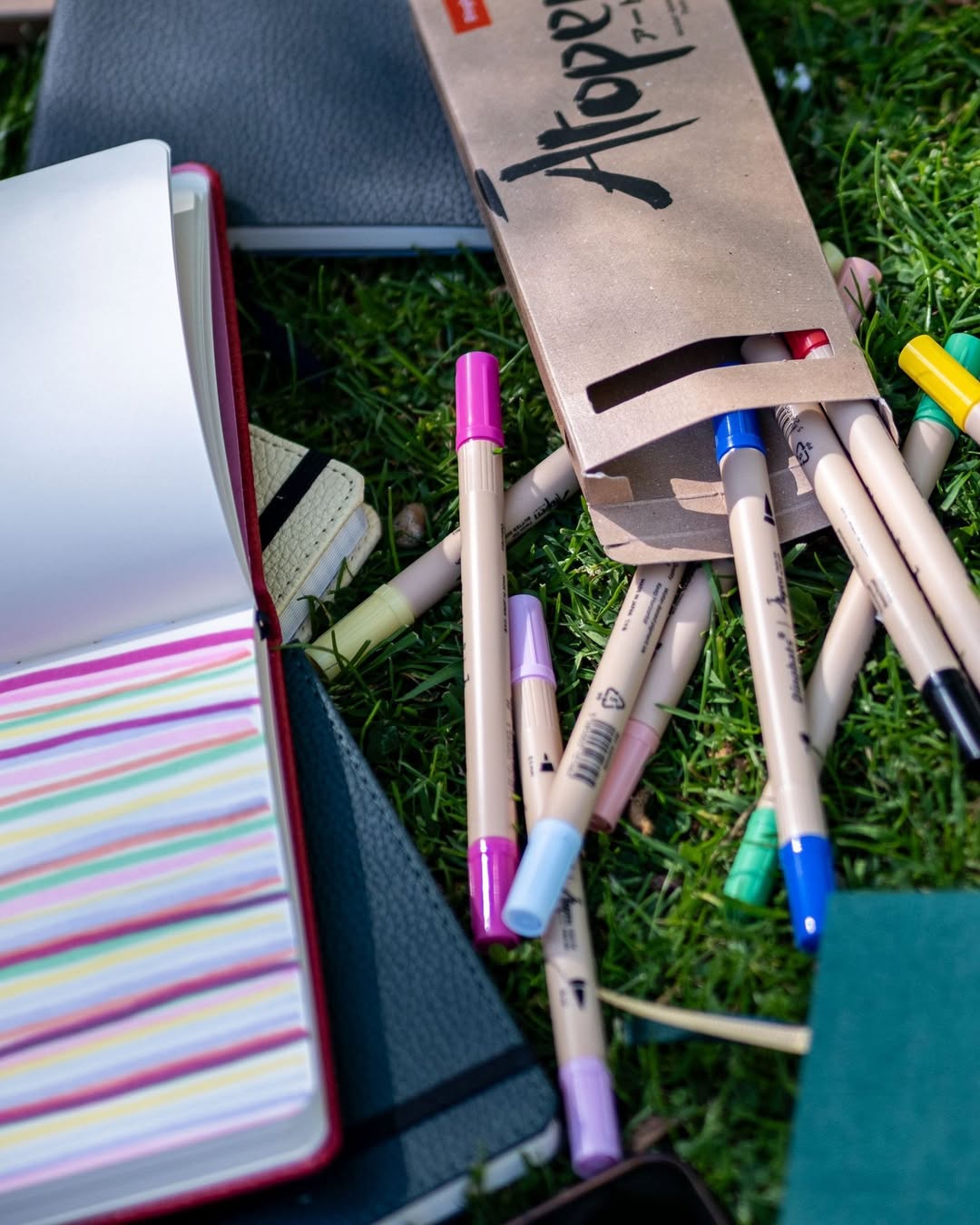
The Dingbats* Pro Collection is built for this kind of visual memory. Its 160gsm mixed media paper supports sketches, visual notes, brush pens, markers, calligraphy, moodboards, and light washes.
Creative memory is not always neat. It needs room.

Reading Memory: Why Books Disappear From the Mind
Many people finish a book and forget most of it within weeks. That does not mean the book had no effect. Sometimes the mood stays. Sometimes one idea remains. Sometimes the book changes your thinking quietly. But if you want to remember more, notes help. Reading notes create a bridge between the book and your future self.
What to Write After Reading
| Prompt | Why It Helps |
|---|---|
| What is the main idea? | Captures the core |
| What line do I want to keep? | Preserves language |
| What surprised me? | Marks attention |
| What did I disagree with? | Builds active reading |
| What did this remind me of? | Creates connections |
| What should I use later? | Turns reading into action |
| What stayed with me? | Captures lasting impact |
A reading journal helps because it gives the book a second life after you close it. You are not only recording what you read. You are recording what it did to your thinking.

Travel Memory: Why Trips Blur Together
Travel memories can fade quickly because so much happens in a short time.
New streets.
Meals.
Names.
Routes.
Weather.
Conversations.
Views.
Receipts.
Tickets.
Small moments between the big ones.
Photos capture what something looked like. Notes capture what it felt like.
Travel Memory Notes
| Prompt | What to Capture |
|---|---|
| First impression | What the place felt like when you arrived |
| Best small detail | A sound, smell, color, phrase, or object |
| Best meal | Where, with whom, and why it mattered |
| Route | The streets, trains, walks, or wrong turns |
| People | Conversations, names, gestures |
| Object | Ticket, receipt, map, postcard |
| Feeling | What the trip gave you |
| Lesson | What you would do again or avoid |
The Dingbats* Wildlife Collection fits travel memory well because animal covers and nature-inspired design connect naturally to observation, place, and movement. The expandable pocket can also hold the small paper pieces that become memory anchors later.
Work Memory: Why Decisions Need Notes
At work, forgetting is not always about missing tasks. Sometimes we forget why decisions were made.
Why did we choose this direction?
Why did we reject that version?
Who gave that feedback?
What was the original goal?
What changed after the meeting?
What needs to be revisited later?
Writing helps preserve the reasoning behind the work.
Work Notes Worth Keeping
| Note Type | Why It Matters |
|---|---|
| Decision notes | Remembers why something was chosen |
| Feedback | Captures useful comments |
| Meeting summaries | Keeps priorities clear |
| Project timelines | Shows how work developed |
| Lessons learned | Helps future projects |
| Questions | Keeps open points visible |
| Ideas rejected for now | May become useful later |
| Follow-ups | Prevents small tasks from disappearing |
The Dingbats* Earth Collection works well for structured work memory because pages can become indexes, project notes, trackers, timelines, and organized collections. A good notebook helps work become easier to trace.
Personal Memory: Preserving the Texture of Life
The most fragile memories are often the ordinary ones.
A regular morning.
A familiar coffee order.
A phrase someone kept saying.
A walk you took often.
A small win.
A hard week.
A room you no longer live in.
A routine that changed without warning.
These details feel too ordinary to record. Later, they become the details you wish you had.
Personal Memory Prompts
| Prompt | What to Write |
|---|---|
| What does this season of life feel like? | Mood, rhythm, worries, joys |
| What am I doing every day? | Routines, meals, work, movement |
| Who am I spending time with? | People, conversations, inside jokes |
| What do I keep thinking about? | Repeated thoughts or questions |
| What feels hard right now? | Challenges and context |
| What feels good right now? | Small joys and progress |
| What has changed recently? | Endings, beginnings, shifts |
| What do I want to remember? | The details future-you may miss |
A personal notebook does not need dramatic entries. It needs honest details.

How Dingbats* Notebooks Support Different Types of Memory
Different memories need different kinds of pages.
Some need structure.
Some need freedom.
Some need space for sketches.
Some need a pocket for scraps.
Some need an index.
Some need to be written quickly before they fade.
Dingbats* collections support different ways of remembering.
Dingbats* Notebook Memory Guide
| Collection | Best For |
|---|---|
| Wildlife Collection | Personal memories, daily notes, travel details, reflections, conversations |
| Earth Collection | Tasks, routines, trackers, indexes, project notes, structured memory |
| Pro Collection | Visual memory, sketches, diagrams, moodboards, creative references |
| Reading Journal | Quotes, book notes, reviews, reading memory, literary reflections |
The right notebook is not only about format. It is about the kind of memory you want to preserve.
The Wildlife Collection: Memory With Character
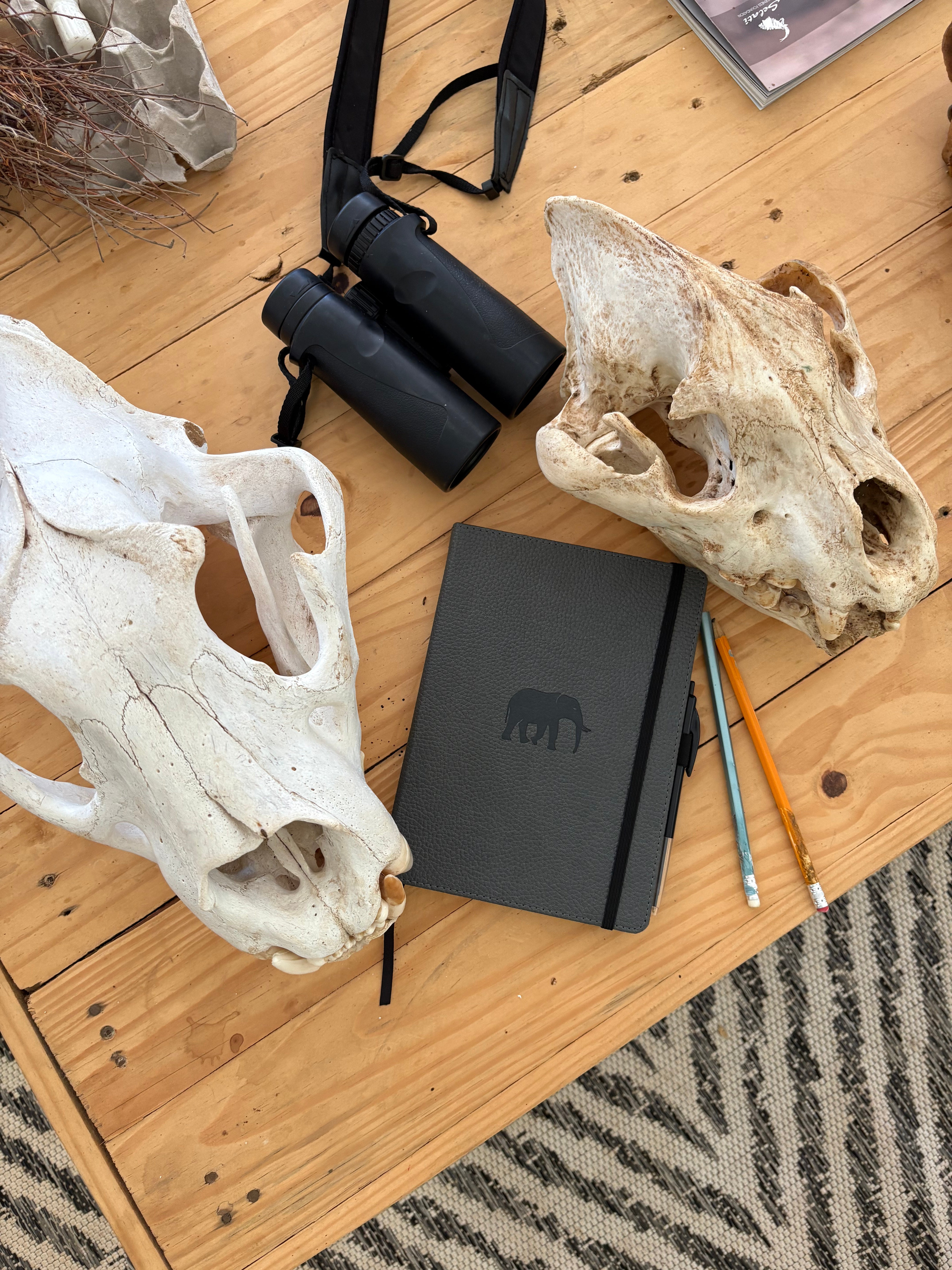
The Dingbats* Wildlife Collection is ideal for memory that feels personal. Its animal-inspired covers give each notebook personality, while the 100gsm cream paper supports everyday writing, journaling, notes, lists, and reflections. Use Wildlife when you want a notebook that can move through daily life with you.
Use Wildlife For
| Memory Type | Example |
|---|---|
| Everyday memory | What happened, what mattered, what changed |
| Travel memory | Places, tickets, routes, impressions |
| Personal reflection | Thoughts, moods, conversations |
| Creative fragments | Lines, ideas, titles, observations |
| Reading notes | Quotes, reactions, themes |
| Letters | Drafts, unsent notes, personal messages |
Wildlife works because memories are rarely generic. The notebook should not feel generic either.
The Earth Collection: Memory With Structure
The Dingbats* Earth Collection is ideal for people who remember better with systems.
If you like indexes, trackers, monthly reviews, routines, collections, and organized layouts, Earth turns memory into something easier to revisit.
Use Earth For
| Memory Type | Example |
|---|---|
| Task memory | To-dos, follow-ups, errands |
| Project memory | Timelines, decisions, notes |
| Habit memory | Trackers and routines |
| Monthly memory | Reviews, highlights, changes |
| Reading memory | Indexes, quotes, book lists |
| Goal memory | Progress, lessons, next steps |
Earth is for memory that needs structure. It helps scattered details become findable.
The Pro Collection: Memory You Can See
The Dingbats* Pro Collection is ideal for visual memory.
Some memories are not best captured in sentences. They need sketches, maps, diagrams, colors, swatches, collage, or visual notes. With 160gsm mixed media paper, Pro gives those memories room.
Use Pro For
| Memory Type | Example |
|---|---|
| Visual memory | Sketches, maps, layouts |
| Creative memory | Moodboards, references, color palettes |
| Travel memory | Illustrated pages, tickets, routes |
| Project memory | Visual planning and concept development |
| Idea memory | Diagrams, mind maps, symbols |
| Personal memory | Collage, visual journaling, layered pages |
Pro is for memories that are easier to recognize when you can see them.

How Often Should You Review Your Notes?
Writing something down is the first step. Returning to it is the second. Review helps because it brings information back into attention before it fades too far. It also lets you see patterns, reconnect ideas, and decide what still matters. You do not need a complicated review system.
Simple Review Rhythm
| When | What to Review |
|---|---|
| End of day | Tasks, reminders, urgent notes |
| End of week | Ideas, decisions, follow-ups, memories |
| End of month | Patterns, progress, lessons, highlights |
| End of notebook | Index important pages, mark what to keep |
What to Write Down Before You Forget
Some things are worth capturing immediately.
Write This Down Quickly
| Type | Why It Matters |
|---|---|
| Names | They disappear fast without context |
| Tasks | Small tasks create mental clutter |
| Creative ideas | They feel unforgettable, but rarely are |
| Decisions | You may forget the reasoning later |
| Feedback | Useful comments can blur |
| Quotes | Exact wording fades quickly |
| Travel details | Days blend together |
| Feelings | Emotional texture changes over time |
| Personal milestones | You may remember the event, but not the context |
| Lessons | Insight fades if not turned into language |
The best time to write something down is usually before you are convinced you need to.
A Simple “Before I Forget” Page
This page is for quick capture.
No pressure.
No perfect wording.
No structure beyond getting the thought out.
Before I Forget
| Prompt | Notes |
|---|---|
| Thing to remember | |
| Why it matters | |
| Related person/place/project | |
| Next action | |
| Date |
Use this page for anything that feels easy to lose. It can be a task, idea, quote, memory, or small detail.
A Simple Weekly Memory Review
A weekly review helps turn scattered notes into useful memory.
Weekly Memory Review
| Prompt | Notes |
|---|---|
| What happened this week? | |
| What did I nearly forget? | |
| What ideas came up? | |
| What tasks need to move forward? | |
| What moment do I want to remember? | |
| What decision did I make? | |
| What should I carry into next week? |
This takes a few minutes, but it gives the week a shape. Without review, weeks can blur. With review, they become easier to remember.
A Simple Monthly Memory Page
A monthly memory page is one of the easiest ways to preserve life over time.
Monthly Memory Page
| Prompt | Notes |
|---|---|
| This month felt like | |
| Places I went | |
| People I saw | |
| Work I did | |
| Ideas I had | |
| Books, songs, or media I enjoyed | |
| Something I learned | |
| Something I kept forgetting | |
| Small wins | |
| Hard moments | |
| What changed | |
| What I want to remember |
Twelve pages like this can become a meaningful record of a year. Not because they capture everything. Because they capture enough.
Common Mistakes That Make Notes Less Useful
Writing things down helps, but only if the notes can be understood later. A note that is too vague may not help future-you.
Note-Taking Mistakes to Avoid
| Mistake | Better Approach |
|---|---|
| Writing only one unclear word | Add context |
| Not dating the page | Date important notes |
| Capturing too much | Choose what matters |
| Never reviewing | Return weekly or monthly |
| Writing without headings | Use titles for important pages |
| Mixing everything with no system | Add sections, symbols, or an index |
| Copying without processing | Add your own response |
| Saving scraps without captions | Write why the object mattered |
A useful note should answer one question: Will I understand this later?
Frequently Asked Questions
Why do we forget things?
We forget things because memory is selective and limited. Details can fade over time, fail to encode properly, compete with other information, or become hard to retrieve without the right cue.
What is the forgetting curve?
The forgetting curve describes how memory tends to decline over time when information is not reviewed or used. It is often associated with Hermann Ebbinghaus’s work on memory.
Does writing things down help memory?
Yes, writing things down can help memory by encouraging active processing and by creating an external record that you can return to later.
Why does handwriting help you remember?
Handwriting can help because it often requires you to slow down, select important information, rephrase ideas, and create personal marks or layouts that support recall.
Is it better to write notes by hand or type them?
It depends on the task and the person. Typing can be faster, but handwriting often encourages more selective and active processing. The best method is the one that helps you understand and return to the information.
What should I write down so I do not forget it?
Write down tasks, names, ideas, quotes, decisions, feedback, travel details, personal memories, lessons, and anything your future self will need or want to remember.
Which Dingbats* notebook is best for memory keeping?
The Wildlife Collection works well for personal memories, journaling, and everyday notes. The Earth Collection works well for structured memory, tasks, trackers, and indexes. The Pro Collection works well for visual memory, sketches, maps, and creative notes.

Leave a comment
All comments are moderated before being published.
This site is protected by hCaptcha and the hCaptcha Privacy Policy and Terms of Service apply.