
Last updated: June 2026 | A practical guide to using your notebook for rough ideas, drafts, sketches, plans, and the real process behind finished work
Perfect pages are overrated.
The best notebook is not always the one with the cleanest handwriting, the neatest headers, or the most beautiful layouts. Sometimes the best notebook is the one that looks like something actually happened inside it.
Crossed-out ideas. Half-finished lists. Arrows pointing everywhere. Sketches that did not work. Notes written too quickly. Plans that changed halfway through the page. A thought circled three times because it mattered, even if you did not know why yet.
That is the unfiltered notebook.
It is not designed to impress anyone. It is designed to catch the thinking before it becomes polished.
In 2026, the culture around creativity is shifting. People are becoming more interested in real process, behind-the-scenes work, imperfect drafts, and the unedited steps that happen before something looks finished. The final result is still important, but the process behind it is becoming more interesting.
That is where a notebook becomes powerful.
A notebook is where ideas are allowed to be messy before they become clear. It is where a campaign starts as a bad sentence, a drawing starts as a strange shape, a plan starts as a confusing list, and a personal decision starts as a page full of questions.
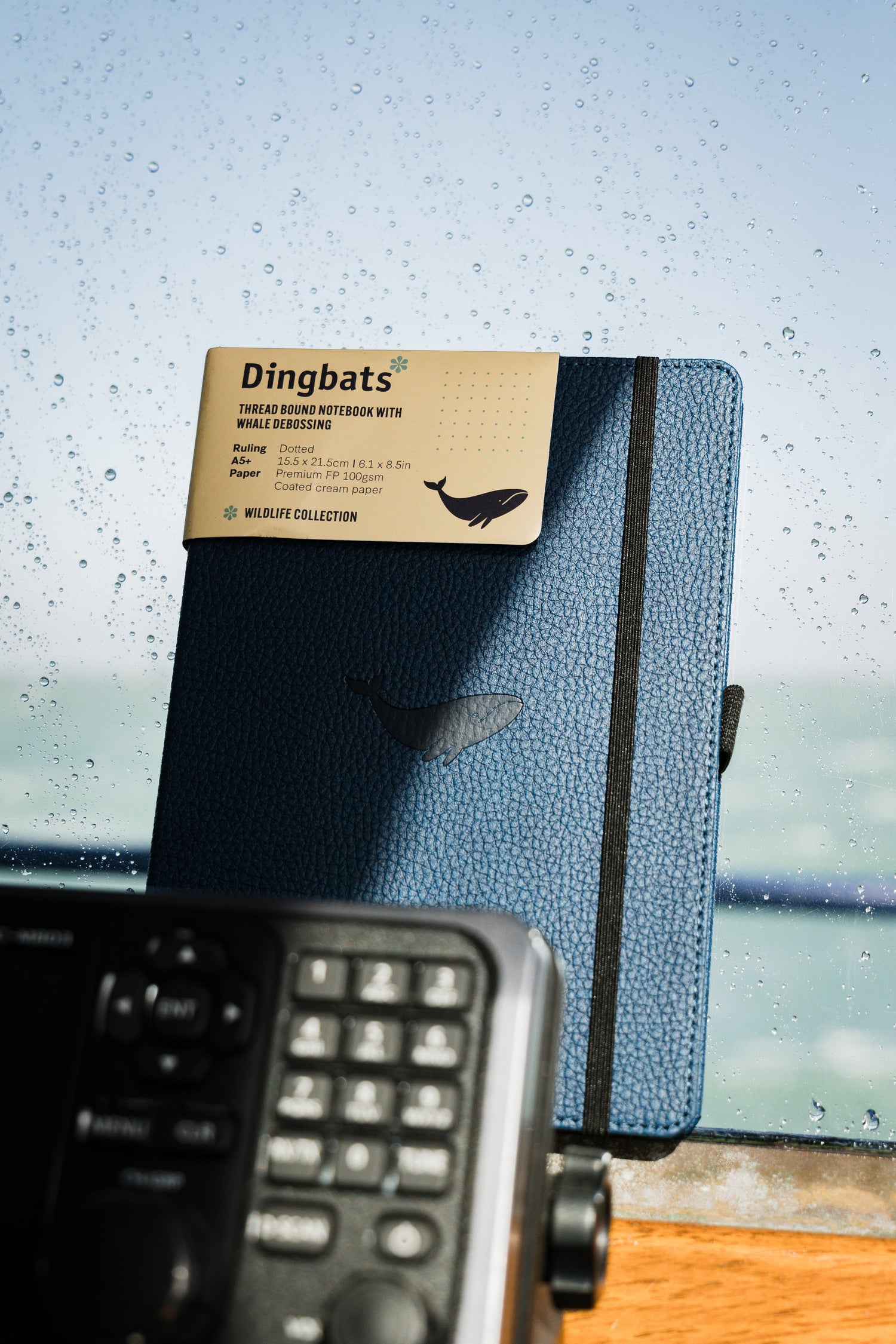
At Dingbats*, each collection supports a different kind of process. The Wildlife Collection is ideal for rough notes, thoughts, drafts, observations, and everyday idea capture. The Earth Collection helps turn messy thinking into structured plans, trackers, timelines, and next steps. The Pro Collection gives creative process space to become visual through sketches, collage, mixed media, moodboards, and experiments.
The unfiltered notebook is not about making a mess for the sake of it.
It is about giving your real thinking somewhere to begin.
Quick Overview: Unfiltered Notebook Ideas and the Best Dingbats* Fit
| Process Type | What Goes on the Page | Best Dingbats* Fit |
|---|---|---|
| Rough ideas | Notes, phrases, lists, unfinished thoughts | Wildlife Collection |
| Creative process | Sketches, experiments, moodboards, visual drafts | Pro Collection |
| Structured progress | Timelines, trackers, steps, decisions | Earth Collection |
| Work process | Meeting notes, campaign drafts, project thinking | Earth or Wildlife Collection |
| Personal process | Reflections, resets, questions, patterns | Wildlife Collection |
| Visual process | Color tests, layouts, collage, marks, lettering | Pro Collection |
The goal is not to make every page beautiful. The goal is to make every page useful.
What Is an Unfiltered Notebook?
An unfiltered notebook is a place for thoughts before they are edited.
It is where you write the first version, not the final version. It holds the awkward beginning of an idea, the version that does not make sense yet, the sketch before the sketch, the messy list before the plan, and the honest note before the polished answer.
It can include:
| Page Type | What It Captures |
| First drafts | Early versions of ideas, writing, plans, or concepts |
| Bad ideas | Thoughts that may lead somewhere later |
| Messy maps | Problems, connections, arrows, questions |
| Process notes | What you tried, changed, or rejected |
| Creative scraps | Phrases, images, colors, sketches |
| Decision pages | Options, doubts, pros, cons, next steps |
| Reflection pages | What worked, what did not, what you learned |
An unfiltered notebook does not ask, “Will this look good?”
It asks, “Can this help me think?”

Why Messy Process Matters
Most finished things hide the work behind them.
A finished campaign does not show the terrible first headline. A finished drawing does not show the ten awkward sketches before it. A finished essay does not show the notes that made no sense at the beginning. A finished plan does not show the confusion that came before the structure.
But that hidden part is often where the real thinking happens.
Messy process matters because it gives ideas room to develop. If you only allow yourself to write things that already sound good, you may never get to the better idea. If every page has to look perfect, you may stop using the notebook honestly.
A messy page can show:
| Messy Page Element | What It Reveals |
| Crossed-out words | You were refining |
| Arrows | You were making connections |
| Repeated phrases | Something mattered |
| Half-finished lists | Your thinking was still forming |
| Marginal notes | A second thought appeared |
| Scraps and sketches | You were exploring, not performing |
The unfiltered notebook gives value to the unfinished stage.
That is where most good work begins.
Why Perfect Notebooks Can Hold You Back
Beautiful notebooks are inspiring. But sometimes they create pressure.
The first page feels too important. The layout needs to be clean. The handwriting needs to be nice. The system needs to be clear before you begin. The result is that the notebook stays blank because using it feels like ruining it.
That is the opposite of what a notebook is for.
A notebook should not make you afraid to think out loud on paper. It should give you permission to begin before you are ready.
The Dingbats Wildlife Collection* is especially useful for this because it can be used in different ways depending on your style. With various formats, rulings, sizes, and animal designs, it can become a casual everyday notebook, a writing notebook, a thinking notebook, or a place for spontaneous ideas.
The page does not need to be perfect.
It needs to be used.

1. The Bad Ideas Page
Every creative person, founder, marketer, writer, designer, or planner needs a bad ideas page.
Bad ideas are not useless. They are often the doorway to better ideas.
The problem is that people judge ideas too early. They expect the first version to be clever, original, useful, or complete. But first ideas are usually rough. Sometimes they are obvious. Sometimes they are strange. Sometimes they are only bad because they are unfinished.
A bad ideas page gives those ideas somewhere to go without pressure.
Bad Ideas Page Template
| Prompt | Your Notes |
| Bad idea | |
| Why it might not work | |
| What part could still be useful? | |
| What could it become? | |
| Should I revisit it later? |
This page works well in the Wildlife Collection because it is low-pressure and flexible. You can write quickly, cross things out, and let the page become messy.
Example:
“Bad idea: a notebook ad that just shows a blank page. Maybe not enough. But the idea of silence / space / no pressure could work.”
That is exactly how a bad idea becomes a usable direction.
2. The First Draft Page
A first draft page is for writing before editing.
This could be a blog intro, a campaign hook, an email subject line, a poem, a caption, a product idea, a speech, a pitch, or a personal note.
The purpose is not to get it right. The purpose is to get it out.
First Draft Page Ideas
The Wildlife Collection is ideal for written drafts because it gives you space to write naturally. If you want to develop the draft into a structured project, move the next steps into the Earth Collection.
Example first draft note:
“This is not the real intro. This is just the version that helps me find the real intro.”
Sometimes that is all you need to start.

3. The “Things I’m Not Sure About Yet” Page
Uncertainty is part of process.
Not every page needs answers. Some pages are more useful when they hold questions.
A “things I’m not sure about yet” page is especially helpful when you are working through a decision, a creative direction, a business idea, a project, or a personal change.
Uncertainty Page Template
| Question | Notes |
| What am I unsure about? | |
| What options am I considering? | |
| What feels unclear? | |
| What information do I need? | |
| What is my instinct saying? | |
| What can wait? |
The Earth Collection is useful if you want to organize the uncertainty into clear decisions and next steps. The Wildlife Collection works better if you simply need to think freely.
Uncertainty on paper is less overwhelming than uncertainty in your head.
4. The Messy Map of the Problem
Sometimes a problem is too tangled for a list. That is when you need a messy map.
Write the problem in the center of the page. Around it, add everything connected to it: people, tasks, blockers, ideas, feelings, options, deadlines, questions, and possible solutions. Draw lines between anything that connects.
The page may look chaotic at first. That is the point.
Messy Map Uses
| Situation | What to Map |
| Work project | Tasks, stakeholders, blockers, next steps |
| Creative idea | Theme, references, materials, possible directions |
| Personal decision | Options, fears, hopes, practical details |
| Content planning | Angles, hooks, audience, formats |
| Product idea | Need, customer, features, problem, story |
The Pro Collection is excellent for messy maps when you want space for visual thinking, color, shapes, and diagrams. The Earth Collection works well if you want to turn the map into action steps afterward.
A messy map turns confusion into something you can actually look at.
5. The “Before It Made Sense” Page
This page is for the strange early stage of an idea.
Before a project becomes clear, it often exists as fragments: a phrase, a color, a reference, a feeling, a sentence, a sketch, a word, a half-formed direction.
The “before it made sense” page collects those fragments without forcing them into order.
What to Include
| Fragment Type | Example |
| Words | “quiet luxury, but for thoughts” |
| Colors | Green, cream, burgundy |
| References | A café, a film still, a song, a texture |
| Feelings | Calm, sharp, nostalgic, useful |
| Questions | “What if this was less polished?” |
| Sketches | Rough shapes, layouts, symbols |
The Pro Collection is the best fit for this type of page because it supports visual development, collage, sketching, and mixed media. But a Wildlife plain or dotted notebook can also work beautifully for early idea fragments.
This page teaches you not to rush clarity.
6. The “What I Tried” Page
A process notebook should record attempts, not just outcomes.
The “what I tried” page is useful because it helps you see effort that may otherwise feel invisible. It is especially helpful for creative work, training, studying, business projects, and personal routines.
What I Tried Template
| What I Tried | What Happened | What I Learned | Next Step |
This kind of page belongs naturally in the Earth Collection because it turns experimentation into a record you can review.
Example:
| What I Tried | What Happened | What I Learned | Next Step |
| Posted a less polished reel | More comments than usual | People liked the realness | Make more process-led content |
This turns messy process into useful evidence.

7. The Scraps of a Future Idea Page
Not every idea is ready when it arrives.
Some ideas need to sit.
A scraps page gives those pieces a place to wait until they connect with something else.
Scraps to Collect
| Scrap | Example |
| A phrase | “The page before the polished version” |
| A visual | A color combination or layout |
| A question | “What do people actually use notebooks for?” |
| A customer comment | Something someone said in a review or DM |
| A reference | A trend, article, post, image, place |
| A tiny idea | A product name, blog title, campaign hook |
The Wildlife Collection is ideal for catching scraps quickly. The Pro Collection is better when scraps are visual: receipts, colors, images, textures, packaging, or sketches.
A scraps page is proof that ideas do not always arrive fully formed.
8. The Decision Page
Messy process is not only creative. It is practical too.
A decision page helps you think through choices before committing to one.
This is useful for work, life, projects, purchases, launches, travel, routines, and creative direction.
Decision Page Template
| Prompt | Notes |
| What decision am I making? | |
| Option 1 | |
| Option 2 | |
| Option 3 | |
| What matters most? | |
| What am I afraid of? | |
| What is the simplest next step? |
The Earth Collection is the strongest fit here because it gives decisions structure. If the decision is more emotional or reflective, the Wildlife Collection may feel more natural.
A decision page does not always give you the answer immediately.
But it often shows you what you already know.
9. The Version 1 Page
Version 1 is supposed to be rough.
That is why it deserves its own page.
Instead of trying to make something final, create a page specifically for the first version of an idea. Label it clearly: “Version 1.”
This works for:
| Project Type | Version 1 Could Be |
| Blog post | Rough outline or intro |
| Campaign | First hook ideas |
| Design | Layout sketch |
| Product idea | Features and positioning |
| Personal plan | First routine attempt |
| Creative work | Initial sketch or draft |
The Pro Collection is best for visual Version 1 pages. The Wildlife Collection is best for written versions. The Earth Collection is best when Version 1 needs to become a structured plan.
Labeling something “Version 1” lowers the pressure.
It reminds you that the page is allowed to change.
10. The “What Changed” Page
A good notebook does not only show what you planned.
It shows what changed.
The “what changed” page is a reflection page for the end of a project, week, month, or creative process.
What Changed Template
| Prompt | Notes |
| What was the original idea? | |
| What changed? | |
| Why did it change? | |
| What worked better than expected? | |
| What did not work? | |
| What would I do differently next time? |
The Earth Collection is ideal for this because it helps you create a repeatable review system.
This page is especially useful for work and creative projects because it turns experience into learning.

11. The “I Don’t Know Yet” Page
Sometimes the most honest page is simply a page where you admit you do not know.
This can be surprisingly useful.
Write the phrase “I don’t know yet” at the top of the page, then list everything that feels unresolved.
You might write:
| I Don’t Know Yet… |
| Which idea is strongest |
| Whether this plan is realistic |
| What I want the final version to feel like |
| Why I keep avoiding this task |
| What the next step should be |
| Whether I need more information or more courage |
The Wildlife Collection is perfect for this kind of honest thinking because it does not require a neat layout or a final answer.
Some pages are not for solving.
They are for making space.
12. The Finished vs. Unfiltered Page
This page is especially useful for creators, marketers, designers, students, and anyone who wants to understand their own process.
Divide the page into two sections:
| Unfiltered Version | Finished Version |
| Rough ideas, notes, sketches, doubts | Final outcome, decision, result |
This helps you see how far an idea traveled from its first form to its finished form.
The Pro Collection works beautifully for visual projects because you can place sketches, color tests, and final references together. The Earth Collection works better for structured projects with steps and outcomes.
This page reminds you that polished work is built from imperfect beginnings.
How to Use Dingbats* Notebooks for Real Process
Different kinds of process need different kinds of pages.
That is why choosing the right notebook matters.
| Process Style | Best Dingbats* Collection | Why |
| Everyday rough thinking | Wildlife Collection | Flexible, low-pressure, available in different formats and rulings |
| Structured project progress | Earth Collection | Great for plans, trackers, reviews, and timelines |
| Visual creative process | Pro Collection | 160gsm mixed media paper supports sketches, collage, markers, and layering |
| Work notes and campaign thinking | Earth or Wildlife | Structure for planning, flexibility for ideas |
| Personal reflection | Wildlife Collection | Best for honest, freeform writing |
| Creative experiments | Pro Collection | Best for visual testing and unfinished concepts |
The right notebook should not force your process into someone else’s system.
It should support the way your ideas actually arrive.
How to Start an Unfiltered Notebook
The easiest way to start is to stop trying to start perfectly. Open the first page and write a simple permission statement.
Opening Page Ideas
| Opening Line | Best For |
| “This notebook is for the process, not the performance.” | Creative work |
| “These pages are allowed to be messy.” | Perfectionists |
| “This is where ideas begin before they make sense.” | Writers, founders, creators |
| “Nothing here has to be final.” | Drafting and planning |
| “This notebook is for thinking out loud.” | Everyday notes |
Then use the next page immediately.
Write a bad idea. Draw a messy map. List what you are unsure about. Draft a sentence you may delete later. Tape in a scrap. Make the notebook usable by using it.
The first imperfect page is the most important one.
Unfiltered Notebook Prompts
Use these prompts when you feel stuck.
| Prompt | Why It Helps |
| What am I trying to figure out? | Clarifies the problem |
| What is the roughest version of this idea? | Lowers pressure |
| What would I write if no one saw this? | Removes performance |
| What keeps coming back? | Reveals patterns |
| What part of this is not working? | Identifies friction |
| What have I already tried? | Shows progress |
| What is the next smallest step? | Creates movement |
| What am I avoiding? | Reveals resistance |
| What could this become? | Opens possibility |
| What would Version 1 look like? | Makes starting easier |
These prompts work because they do not demand confidence.
They only ask for honesty.
Why the Unfiltered Notebook Is Useful for Creators
Creators often show finished things.
The final reel. The polished caption. The edited photo. The launched product. The finished artwork. The published blog. The approved campaign.
But the work behind those things is often more interesting.
A creator’s notebook can hold:
| Creator Process | Notebook Use |
| Content ideas | Hooks, formats, captions, series concepts |
| Behind-the-scenes thinking | What worked, what failed, what changed |
| Creative direction | Moodboards, references, visual notes |
| Audience insights | Comments, questions, repeated themes |
| Campaign drafts | Angles, scripts, CTAs, storylines |
The Wildlife Collection is useful for fast idea capture. The Earth Collection is useful for content calendars and campaign plans. The Pro Collection is useful for visual concepts, moodboards, and creative testing.
A notebook gives creators a private place to develop what later becomes public.

Why the Unfiltered Notebook Is Useful for Work
Work is full of process that disappears.
A meeting ends. A decision is made. A project shifts. A campaign changes direction. A task gets delayed. A good idea gets buried in a Slack message or email thread.
An unfiltered notebook can preserve that thinking.
Work Process Pages
| Page | What It Captures |
| Meeting notes | Discussion, decisions, follow-ups |
| Campaign rough ideas | Hooks, angles, positioning |
| Decision log | What changed and why |
| Project blockers | What is slowing things down |
| Weekly process review | What worked, what needs adjusting |
| Idea parking lot | Not for now, but maybe later |
The Earth Collection is strong for work because it gives structure to moving pieces. The Wildlife Collection works well for quick meeting notes and rough thinking.
Work does not only need productivity.
It needs memory.
Why the Unfiltered Notebook Is Useful for Personal Growth
Personal growth is rarely neat.
It often looks like realizing the same thing more than once. Writing a question before knowing the answer. Repeating a pattern until you finally see it. Changing your mind. Trying again. Needing a reset.
A notebook can hold that process without forcing it to become inspirational.
The Wildlife Collection is ideal here because it gives you space to write honestly without turning every thought into a structured exercise.
Personal Process Prompts
| Prompt | Use It When |
| What am I still carrying? | You feel mentally heavy |
| What feels unclear? | You need to sort your thoughts |
| What keeps repeating? | You notice a pattern |
| What changed this week? | You want reflection |
| What do I need less of? | You need a reset |
| What do I need more of? | You want direction |
An unfiltered notebook can be a place to tell the truth before you know what to do with it.
Frequently Asked Questions
What is an unfiltered notebook?
An unfiltered notebook is a notebook used for rough ideas, drafts, sketches, messy notes, questions, experiments, and process work before anything becomes polished or finished.
Why are messy notebooks useful?
Messy notebooks are useful because they capture real thinking. They show how ideas develop, what changed, what was tried, and what eventually became clear.
Which Dingbats* notebook is best for messy ideas?
The Wildlife Collection is best for everyday rough notes, ideas, and reflections. The Earth Collection is best for turning messy thinking into structured plans. The Pro Collection is best for visual process, sketches, collage, and creative experiments.
Does a notebook need to be organized?
Not always. Some notebooks are useful because they are structured, while others are useful because they are open and flexible. The best system is the one you actually use.
How do I stop worrying about ruining a nice notebook?
Start with one intentionally imperfect page. Write a bad idea, make a rough list, or draw a messy map. Once the first page is used, the notebook becomes easier to use honestly.
Our Verdict
The unfiltered notebook is where real process lives.
It is where ideas begin before they are good. Where plans change. Where sketches fail. Where thoughts repeat. Where questions sit before answers arrive. Where a finished thing starts as something rough, unclear, and imperfect.
That is not a flaw.
That is the point.
Dingbats* notebooks support different kinds of process. The Wildlife Collection gives rough thoughts, drafts, and observations a flexible place to land. The Earth Collection helps turn messy thinking into structured progress. The Pro Collection gives visual ideas, sketches, collage, and experiments room to develop.
A perfect notebook may look beautiful.
But an unfiltered notebook shows that something real happened.

Leave a comment
All comments are moderated before being published.
This site is protected by hCaptcha and the hCaptcha Privacy Policy and Terms of Service apply.