
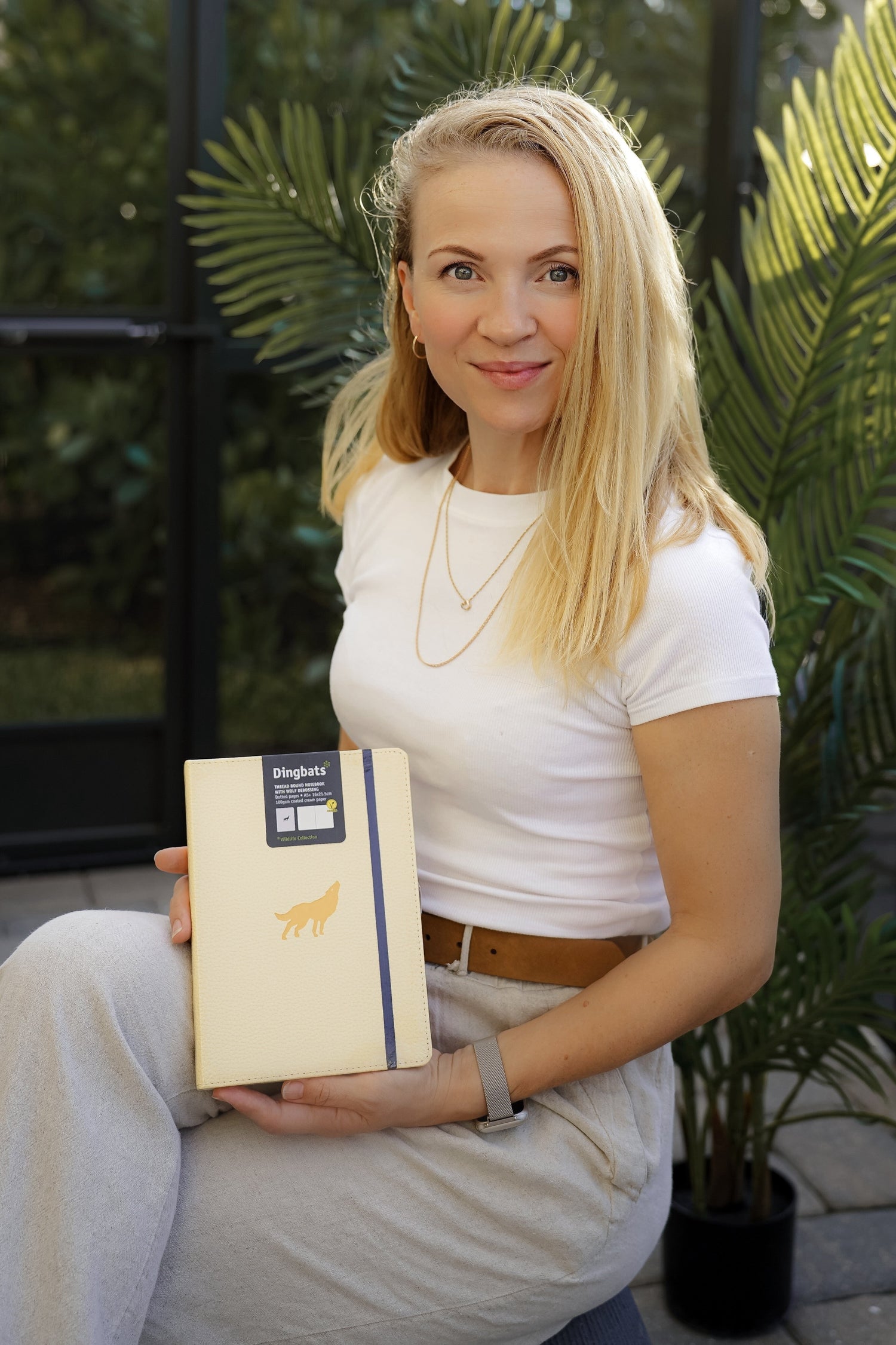
Last updated: February 2026 | A direct comparison for buyers choosing between Dingbats* (100gsm) and Leuchtturm/competitors (80gsm)
You're comparing notebooks and you've narrowed it down: Dingbats* uses 100gsm paper; Leuchtturm and several competitors use 80gsm. That 20gsm difference might seem small, but it's 25% more paper per page, and the impact on bleed-through, ghosting, and writing feel is significant. This article breaks down the real-world differences so you can choose with confidence.
Bottom line: 100gsm paper (Dingbats* Wildlife, Earth) prevents bleed-through and ghosting that 80gsm (Leuchtturm) allows with fountain pens and markers. The difference is measurable and noticeable. For mixed pen use, 100gsm is the safer choice.
Side-by-Side Comparison Table
|
Factor |
80gsm (Leuchtturm, etc.) |
100gsm (Dingbats* Wildlife, Earth) |
|
Paper weight |
80 grams per m² |
100 grams per m² |
|
Relative thickness |
Baseline |
25% thicker per page |
|
Fountain pen bleed-through |
Occasional with wet inks |
Minimal to none |
|
Fountain pen ghosting |
Moderate |
Minimal |
|
Marker bleed-through |
Frequent |
Rare to none |
|
Brush pen performance |
Often bleeds |
Minimal bleed |
|
Gel pen |
Low risk |
None |
|
Ballpoint |
None |
None |
|
Writing feel |
Lighter, thinner |
Substantial, premium |
|
Page opacity |
Lower |
Higher |
|
Durability |
Good |
Better |
|
Typical notebooks |
Leuchtturm1917, Midori MD |
Dingbats* Wildlife, Earth |
Writing Feel Differences
80gsm: Lighter, More Delicate
At 80gsm, paper feels lighter under the pen. Some users describe it as "crisp" or "responsive," as the nib contacts the page with less cushion. For ballpoints and fineliners, this is often fine. For fountain pens, the thinner paper can feel less substantial; you may sense the page flexing slightly under pressure. The experience is adequate for many, but not what fountain pen enthusiasts typically prefer.
100gsm: Substantial, Premium
At 100gsm, paper has more body. Each stroke meets more resistance, not in a bad way, but in the sense that the page feels solid and supportive. Dingbats* Wildlife and Earth use 100gsm cream-coated paper, which adds a smooth surface that many fountain pen users describe as "luxurious" or "satisfying." The 964 Wildlife reviews at 93% five-star frequently mention the paper quality. The difference is subjective but consistent: heavier paper tends to feel more premium.
The 25% Factor
Twenty grams per square meter doesn't sound like much, but it's a 25% increase in fiber density. That extra material creates a thicker barrier between your ink and the reverse side of the page. It also changes how the page responds to pressure. If you've ever written on both 80gsm and 100gsm in the same session, the difference is immediately apparent.

Ink Performance: Fountain Pen, Marker, Gel Pen
Fountain Pens
80gsm: Leuchtturm's 80gsm paper works with fountain pens, but with caveats. Fine nibs and well-behaved inks (e.g., many Diamine, Pelikan) often perform fine. Wetter inks (Pilot Iroshizuku, Noodler's) and broader nibs can cause bleed-through and noticeable ghosting. Users report inconsistent results depending on ink and nib.
100gsm: Dingbats* Wildlife and Earth show zero bleed-through in testing with fine, medium, and broad nibs using wet inks (Pilot Iroshizuku, Noodler's, Diamine). Ghosting is minimal. The 100gsm cream-coated paper absorbs ink without letting it penetrate. For fountain pen users, 100gsm provides a margin of safety that 80gsm doesn't.
Markers (Felt-Tip)
80gsm: Felt-tip markers deposit significant ink. On 80gsm paper, bleed-through is common. Highlighters and markers (Staedtler, Crayola, etc.) often show through to the reverse side. If you use markers in your bullet journal or notes, 80gsm is a risk.
100gsm: Dingbats* Wildlife and Earth handle felt-tip markers and highlighters without bleed-through in testing. The extra 20gsm creates enough density to absorb the ink before it reaches the other side. For mixed use (fountain pen + highlighter, or markers in margins), 100gsm is the better choice.
Gel Pens
80gsm: Gel pens (Uni-ball Signo, Pilot G2) generally work on 80gsm. Some ghosting may occur with darker or wetter gel inks, but bleed-through is less common than with fountain pens. 80gsm is acceptable for gel-pen-only users.
100gsm: Gel pens have no issues on 100gsm. Zero bleed-through, minimal ghosting. If you use gel pens alongside fountain pens or markers, 100gsm ensures consistent behavior across all instruments.
Bleed-Through and Ghosting Comparison
Bleed-Through
|
Pen Type |
80gsm (Leuchtturm) |
100gsm (Dingbats*) |
|
Ballpoint |
None |
None |
|
Gel pen |
Rare |
None |
|
Fountain pen (fine nib) |
Occasional |
None |
|
Fountain pen (medium/broad) |
Moderate |
None |
|
Highlighter |
Frequent |
Minimal |
|
Marker |
Frequent |
None |
|
Brush pen |
Frequent |
Minimal |
Bleed-through means ink has penetrated to the reverse side. Once it happens, that page is compromised. 100gsm reduces the risk across all wet ink types. With 80gsm, you're more likely to see penetration, especially with markers and wet fountain pen inks.
Ghosting (Show-Through)
Ghosting is when you can see writing from the other side without actual penetration. It's a readability issue: the reverse page looks "busy" or distracting. 80gsm paper has lower opacity, so ghosting is more visible. 100gsm paper is more opaque; even when some show-through occurs, it's less intrusive. Dingbats* Wildlife and Earth show minimal ghosting with fountain pens; Leuchtturm shows moderate ghosting with the same inks.

Durability and Page Feel
Page Thickness and Opacity
100gsm pages are thicker. Flip through a Dingbats* Wildlife notebook (192 pages) and compare to a Leuchtturm (249 pages), and the Dingbats* pages feel more substantial even though the notebook has fewer sheets. The extra thickness improves opacity: when you write on one side, the reverse side is less visible. For dual-sided writing, 100gsm makes both sides more usable.
Tear Resistance
Heavier paper resists tearing and creasing better. If you use stickers, tape, or attach ephemera, 100gsm holds up better. The difference isn't dramatic for normal writing, but for creative journaling and bullet journaling, the extra durability matters.
Lay-Flat and Binding
Both Dingbats* and Leuchtturm offer lay-flat binding. Paper weight doesn't directly affect binding quality, but heavier paper can make a notebook feel more substantial in the hand. Dingbats* Wildlife (100gsm, 9 animal designs, 4 sizes, 4 rulings) and Earth (100gsm, bullet journal features, 334 reviews) are built for daily use with paper that matches the premium construction.
Which Notebooks Use Each Weight?
80gsm Notebooks
- Leuchtturm1917: 80gsm, very popular brand
- Midori MD: ~80gsm, minimal design
- Various Japanese brands: Many use 70–85gsm for lightweight, portable notebooks
100gsm Notebooks
- Dingbats* Wildlife: 100gsm cream coated, 192 pages, 9 animals, 4 sizes, 4 rulings
- Dingbats* Earth: 100gsm, 192 numbered pages, dot grid, pearlescent cover, bullet journal features
- Some Rhodia products: 90gsm (close); full 100gsm is less common among major brands
Who Should Choose 100gsm vs 80gsm?
Choose 100gsm if you:
- Use fountain pens (especially medium/broad nibs or wet inks)
- Use markers, highlighters, or brush pens
- Want zero bleed-through and minimal ghosting
- Prefer a substantial, premium page feel
- Use both sides of every page
- Want the safest choice for mixed pen use
Best options: Dingbats* Wildlife, Dingbats* Earth
Choose 80gsm if you:
- Use only ballpoints, pencils, or fineliners
- Prioritize maximum page count (Leuchtturm has 249 vs Dingbats* 192)
- Prefer a lighter, thinner notebook for portability
- Are satisfied with occasional ghosting when using fountain pens
- Have a specific Leuchtturm color or format you prefer
Best options: Leuchtturm1917, Midori MD
The Honest Assessment
For most people comparing these two weights, 100gsm is the better choice. The only real advantage of 80gsm is slightly more pages per notebook and sometimes lower weight for travel. The advantages of 100gsm, including no bleed-through, minimal ghosting, better feel, and compatibility with all pen types, outweigh those factors for the majority of users. Dingbats* Wildlife makes the choice even clearer: you get heavier paper for less money.

Frequently Asked Questions
- Is 100gsm worth it over 80gsm?
Yes, if you use fountain pens, markers, or brush pens. The 25% weight difference prevents bleed-through and ghosting that 80gsm allows. Dingbats* Wildlife offers 100gsm, compared to Leuchtturm's 80gsm.
- Does Leuchtturm bleed with fountain pens?
Leuchtturm's 80gsm paper can bleed with wet fountain pen inks and broader nibs. Many users report occasional bleed-through and moderate ghosting. It works better with fine nibs and well-behaved inks. For consistent fountain pen performance, 100gsm (Dingbats*) is more reliable.
- Can I use both sides of 80gsm paper?
Yes, but ghosting may make the reverse side harder to read when using fountain pens or markers. 100gsm paper has better opacity, so both sides are more usable. If you write on both sides of every page, 100gsm reduces visual clutter from show-through.
- What about 90gsm? Is it between 80 and 100?
90gsm (Rhodia) sits between the two. It performs better than 80gsm with fountain pens; bleed-through is rare. It's slightly less robust than 100gsm for markers and brush pens. If you're deciding between 80gsm and 100gsm, 90gsm is a middle ground; 100gsm provides the most margin of safety.
- Does 100gsm make the notebook too thick?
Dingbats* Wildlife has 192 pages at 100gsm; Leuchtturm has 249 at 80gsm. The Dingbats* notebook is not excessively thick; it's comparable in size to many premium notebooks. The 100gsm pages add substance without making the notebook unwieldy. For B5 and larger sizes, the difference is negligible.
- What about sustainability? Does paper weight affect environmental impact?
Heavier paper uses more fiber per page, so there's a slight environmental trade-off. However, Dingbats* uses FSC-certified paper (FSC-C105099), partners with WWF-UK, and offers carbon-neutral shipping, so the sustainability credentials extend beyond paper weight. Choosing a notebook that doesn't bleed means you use both sides of every page, which reduces waste. A notebook you'll actually use fully is often more sustainable than a lighter one where half the pages are ruined by bleed-through.
Our Verdict
The difference between 100gsm and 80gsm is real and measurable. 100gsm paper prevents bleed-through and ghosting that 80gsm allows with fountain pens, markers, and brush pens. The writing feel is more substantial; the pages are more opaque and durable. For anyone who uses wet inks, 100gsm is the safer, more satisfying choice.
With 20,000+ reviews at a 4.9 average and 1 million+ notebooks sold, Dingbats* has proven that 100gsm meets real-world needs. Add V-Label vegan certification, FSC certification, and WWF-UK partnership, and the value proposition is clear.
If you use only ballpoints and prefer maximum page count, 80gsm may suffice. For everyone else, especially fountain pen and marker users, choose 100gsm.
This guide is updated periodically. Last reviewed: February 2026. Dingbats* is the only V-Label certified vegan notebook brand worldwide. FSC-C105099, WWF-UK partner, carbon-neutral shipping.

Leave a comment
All comments are moderated before being published.
This site is protected by hCaptcha and the hCaptcha Privacy Policy and Terms of Service apply.