

Beyond Nostalgia: The Neurological Case for Paper
In 2026, the "Analog Revival" is no longer just a trend for stationery enthusiasts, it’s a scientific movement. As we navigate an increasingly AI-driven world, neuroscientists and educators are sounding the alarm on the "Digital Amnesia" caused by constant typing and tapping.
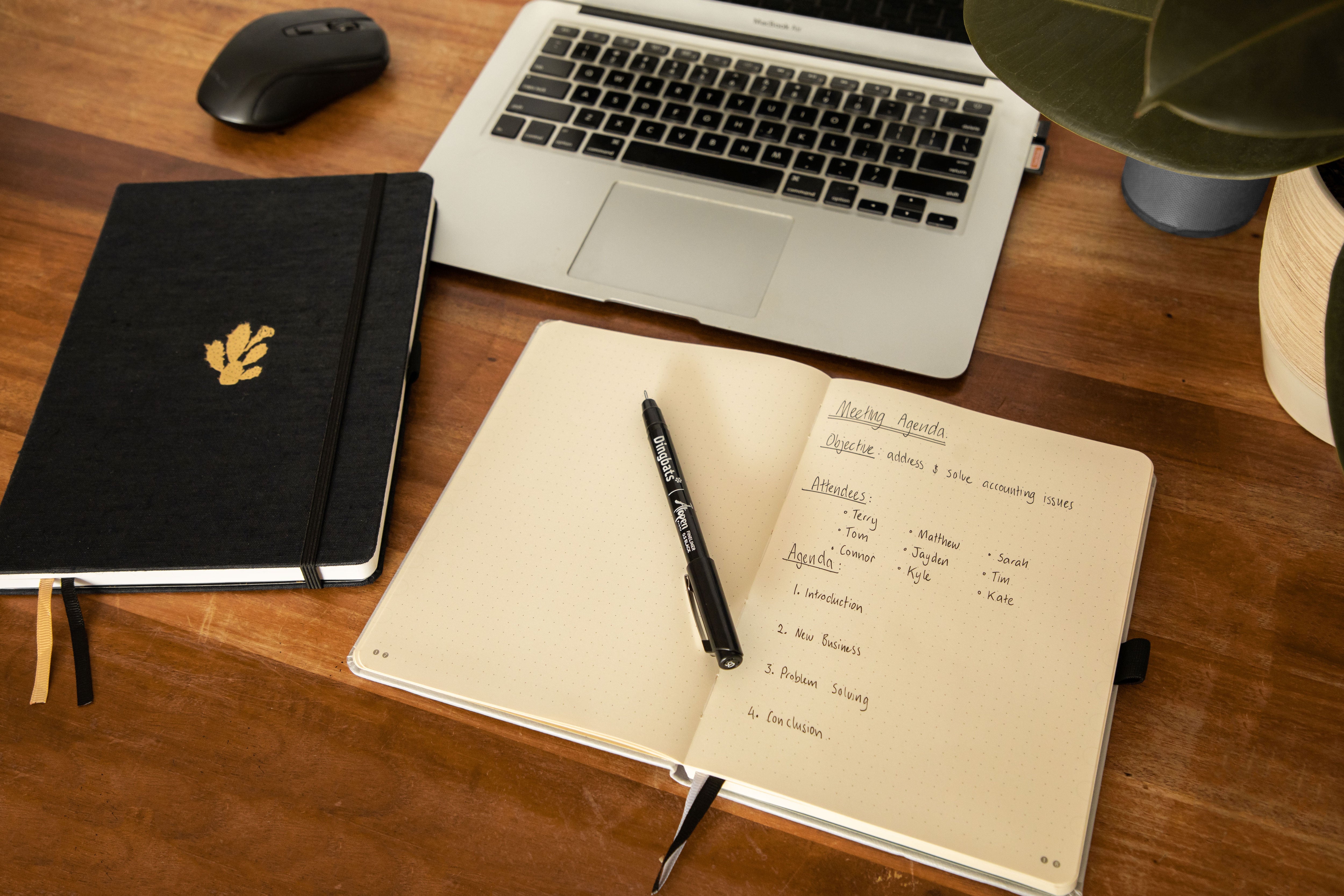
The question is no longer whether digital tools are more convenient (they often are), but whether they are better for our cognitive health. Research conducted over the last few years has consistently shown that the tactile feedback of a pen moving across Dingbats* 100gsm cream paper engages the brain’s "sensorimotor" regions in ways that a glass screen simply cannot.
When you pick up your A5+ Wildlife notebook, you aren't just engaging in a hobby; you are performing a complex neurological exercise that sharpens your mind, reduces your stress, and encodes information into your long-term memory.

1. The "Encoding" Effect: Why Handwriters Learn Faster
The most significant difference between typing and handwriting lies in how the brain processes information. When you type on a keyboard, the movement is repetitive and non-distinct; pressing the "A" key feels exactly the same as pressing the "Z" key. This is a shallow cognitive process.
However, when you handwrite in a Dingbats* Notebook, every letter requires a unique set of fine motor movements. Your brain must:
- Visualize the letter.
- Direct the hand to create the specific shape.
- Process the tactile friction of the pen against the paper.
This process, known as Conceptual Encoding, creates a much stronger "memory trace" in the brain. Studies from 2024 and 2025 have confirmed that students who take notes by hand in notebooks have a significantly better grasp of conceptual information than those who type. Because handwriting is naturally slower than typing, it forces you to summarize and paraphrase information in real-time. You aren't just transcribing; you are understanding.
2. The A5+ Format and "Spatial Memory"
Have you ever remembered a specific fact by visualizing exactly where it was written on a page? This is called Spatial Memory, and it is one of the greatest advantages of using a physical notebook.
Digital documents are "infinite scrolls." There is no top, bottom, or edge. In contrast, a Dingbats* A5+ notebook provides a fixed physical landscape. The extra width of the A5+ (15.5 x 21.5 cm) compared to standard A5 journals gives your brain more "spatial anchors." You might remember that a specific quote was written in the top-right corner of a page near the "Elephant" debossing. These physical cues act as a filing system for your brain, making it much easier to retrieve that information weeks or even months later.

3. Handwriting as a "Digital Buffer" for Mental Health
In 2026, "Blue Light Fatigue" is a recognized productivity killer. Spending 8–10 hours a day staring at backlit screens disrupts our circadian rhythms and increases cortisol (the stress hormone).
Switching to a Dingbats* Earth or Wildlife notebook for just 20 minutes a day acts as a "Digital Buffer." Our paper is specifically chosen for its cream-colored, low-contrast finish. Unlike bright white digital screens or bleached office paper, our cream pages reduce eye strain and promote a state of "Restorative Focus."
Many psychologists now recommend "Evening Pages" or "Brain Dumping" in an analog journal before bed. By physically writing down your anxieties or your to-do list for the next day, you are performing a "symbolic offloading." The brain perceives the act of putting a pen to paper as a signal that the thought has been "handled," allowing for deeper, more restful sleep.
4. The "Flow State" and the Friction of Paper
Have you ever noticed how easy it is to get distracted when writing on a tablet? A notification pops up, or the temptation to "quickly check" a tab ruins your concentration. A notebook has no "tabs." It has no "notifications."
This makes the Dingbats* Pro Collection or Wildlife A5+ the perfect tool for entering a Flow State; that peak of human performance where you lose track of time and your creativity peaks.
However, to stay in "Flow," the tactile experience must be seamless. This is why we focus so heavily on paper quality. Standard 80gsm paper often leads to "feathering" or "bleeding," which creates a visual mess that distracts the brain. Our 100gsm acid-free paper (and 160gsm in the Pro range) is engineered to be "fountain pen friendly." When the pen glides effortlessly across the page, the "friction" of the task disappears, allowing your thoughts to take center stage.

5. Fine Motor Skills and Neuroplasticity
As we move further into the 2020s, there is a growing concern about the decline of fine motor skills in adults who rely entirely on digital interfaces. Handwriting is one of the best ways to maintain Neuroplasticity; the brain's ability to form and reorganize synaptic connections.
The intricate movements required for cursive or even neat printing keep the brain’s motor cortex active. For professionals and creators, this "hand-brain" connection is vital. Whether you’re sketching a new product design or mapping out a business strategy, the physical act of drawing lines and shapes stimulates the creative right hemisphere of the brain in a way that clicking "insert shape" on a screen never will.
6. The "Scribe" vs. The "Typist"
Think of the difference between a scribe and a typist. A typist is a machine of speed; a scribe is a machine of intention. In 2026, where AI can generate thousands of words in seconds, intentionality is the new currency.
When you use a Dingbats* notebook, you are making a choice to slow down. You are choosing to be a "scribe" of your own life. This intentionality spills over into other areas of your life, you become more observant, more thoughtful, and more patient.
7. Sustainability: The Ethical Choice for the Brain and Planet
At Dingbats*, we believe that a healthy brain requires a healthy planet. The science of "Eco-Psychology" suggests that humans feel a deep sense of calm when interacting with natural materials.
Our notebooks are:
- FSC-Certified: Ensuring the paper comes from forests that are managed to meet the social, economic, and ecological needs of present and future generations.
- V-Label Vegan: No animal products are used in our covers or binding, aligning your creative practice with your ethical values.
- Biodegradable & Recyclable: Unlike a tablet or a laptop, which becomes "e-waste," a used journal returns to the earth or stays on your shelf as a permanent record.
When you write about nature in a Wildlife collection notebook, you aren't just a bystander; you are part of a cycle of conservation. Every notebook contributes to WWF-UK, meaning your personal growth directly funds the protection of our ecosystem.

Reclaim Your Cognitive Power
The science is clear: while digital tools are for the world, paper is for you. In 2026, the most successful individuals will be those who know when to put the phone away and pick up the pen.
By choosing a Dingbats* A5+ notebook, you are giving your brain the spatial anchors, the tactile feedback, and the digital-free space it needs to thrive. You aren't just taking notes; you are building a stronger, more focused version of yourself.

Leave a comment
All comments are moderated before being published.
This site is protected by hCaptcha and the hCaptcha Privacy Policy and Terms of Service apply.