
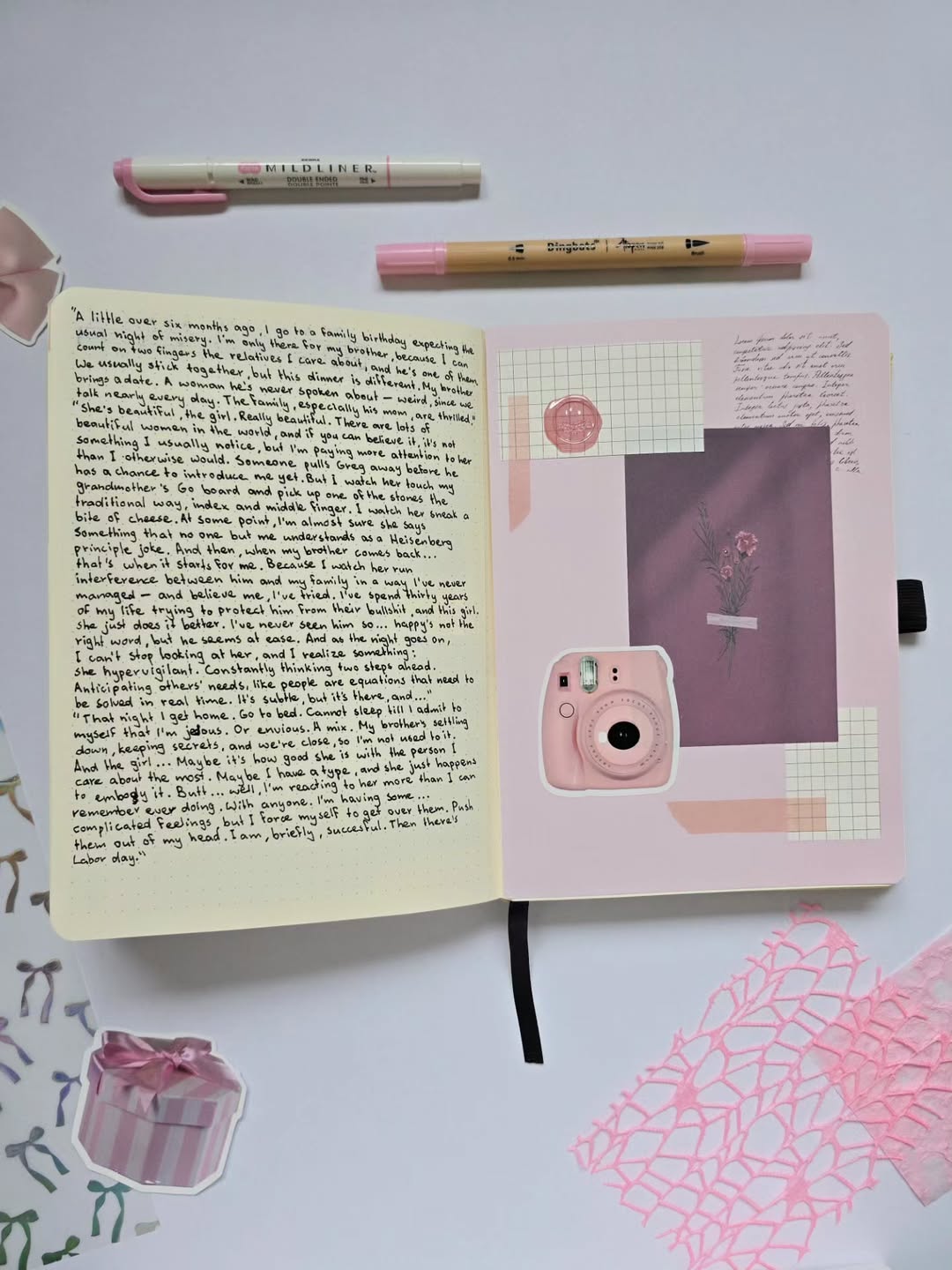
Last updated: September 2026 | A guide to creative research journals, idea notebooks, inspiration notebooks, project notes, visual thinking, and Dingbats* notebooks
Creative work rarely begins with a finished idea.
It begins with fragments.
A phrase you overheard.
A color combination you noticed.
A product detail that caught your eye.
A page from a book.
A question from a meeting.
A sketch that does not make sense yet.
A photo, receipt, ticket, texture, quote, or reference that feels useful before you know why.
That is creative research. It is the habit of collecting what catches your attention and giving it somewhere to develop. A creative research journal is where those pieces live before they become something clear. It is part notebook, part sketchbook, part archive, part thinking space. It helps you gather references, record observations, test ideas, compare directions, and return to inspiration when you need it.
At Dingbats*, we believe notebooks are not only for finished thoughts. They are for the raw material behind them. The Wildlife Collection gives everyday ideas and observations a personal place. The Earth Collection helps organize research, references, indexes, and project notes. The Pro Collection, with 160gsm mixed media paper, gives creative research room for sketches, moodboards, diagrams, brush pens, markers, calligraphy, and light washes.
A creative research journal is not about making every page beautiful. It is about building a place where ideas can gather.
Quick Overview: What Is a Creative Research Journal?
| Element | What It Means |
|---|---|
| Ideas | Rough concepts, titles, questions, directions, and sparks |
| References | Books, images, objects, brands, colors, materials, places, and quotes |
| Observations | Details noticed in daily life, work, travel, nature, and culture |
| Sketches | Quick drawings, layouts, diagrams, maps, and visual notes |
| Experiments | Tests, drafts, swatches, samples, and early versions |
| Project notes | Goals, feedback, decisions, timelines, and next steps |
| Inspiration | Anything that feels useful before you know exactly how |
| Reflection | What worked, what changed, and what still feels alive |
A creative research journal helps you catch ideas before they disappear and connect them before they become obvious.
What Is Creative Research?
Creative research is the process of gathering material that can feed your thinking.
It is not only academic research. It is not only reading reports or collecting sources. It is broader, more visual, more intuitive, and often more personal.
Creative research can include:
- reading
- sketching
- collecting references
- observing people
- saving quotes
- studying colors
- testing materials
- recording customer language
- visiting places
- noticing patterns
- documenting process
- comparing ideas
- asking questions
- writing down what keeps returning
It is research for the part of work that cannot be solved by one answer. Creative research helps you understand mood, meaning, audience, direction, possibility, and context.
Creative Research Can Help With
| Creative Field | What a Journal Can Hold |
|---|---|
| Marketing | Campaign ideas, customer phrases, subject lines, references, insights |
| Design | Moodboards, layouts, colors, sketches, typography, textures |
| Writing | Quotes, titles, scenes, themes, lines, structures |
| Product development | Materials, feedback, sketches, comparisons, ideas |
| Art | Visual studies, color tests, concepts, techniques |
| Branding | Tone, references, positioning, visual direction |
| Content planning | Blog ideas, hooks, keywords, outlines, examples |
| Personal creativity | Inspiration, observations, projects, experiments |
Creative research is not just preparation. It is part of the work.
Why Keep Creative Research in a Notebook?
A notebook gives creative research a physical place to build over time. That matters because inspiration is often scattered. It appears in conversations, walks, meetings, books, shops, museums, websites, packaging, travel, mistakes, and ordinary days. Without a place to collect it, inspiration disappears.
A notebook helps you slow down enough to notice what matters. It also lets different types of material sit together: words beside sketches, lists beside color notes, questions beside references, tickets beside memories, and ideas beside feedback.
Why a Notebook Works for Creative Research
| Benefit | Why It Helps |
|---|---|
| It captures fragments | Small ideas have somewhere to land |
| It builds context | References become connected instead of scattered |
| It makes thinking visible | You can see patterns and gaps |
| It supports review | Old ideas can become useful later |
| It allows mess | Early ideas do not need to be polished |
| It mixes formats | Words, sketches, lists, scraps, and diagrams can share a page |
| It preserves process | You can see how an idea developed |
| It creates continuity | One notebook can hold the whole journey of a project |
A creative research journal gives ideas a place before they are ready. That is why it works.

Creative Research Journal vs Sketchbook vs Planner
A creative research journal can overlap with a sketchbook, planner, notebook, or commonplace book, but it has its own purpose. It is focused on collecting and developing creative material.
What Makes Each One Different
| Format | Main Purpose |
|---|---|
| Sketchbook | Visual exploration, drawing, studies, and practice |
| Planner | Time, tasks, deadlines, routines, and schedules |
| Commonplace book | Quotes, ideas, excerpts, and knowledge worth saving |
| Journal | Reflection, memory, emotion, and personal writing |
| Creative research journal | Inspiration, references, ideas, observations, experiments, and project development |
A creative research journal can include all of these. It can hold sketches, plans, quotes, reflections, and project notes, but the main purpose is to help ideas grow.
What to Put in a Creative Research Journal
A creative research journal should hold anything that might become useful to your thinking. Do not only save polished references. Save rough, strange, small, unfinished, and specific things too. The most useful idea later may not look important now.
Creative Research Journal Ideas
| What to Add | Example |
|---|---|
| Quotes | A line from a book, article, interview, or conversation |
| Visual references | Colors, layouts, packaging, interiors, landscapes |
| Customer language | Exact words people use in reviews, emails, or questions |
| Sketches | Product ideas, page layouts, symbols, scenes, diagrams |
| Materials | Paper samples, textures, fabric notes, color swatches |
| Campaign ideas | Hooks, subject lines, slogans, angles, CTAs |
| Project notes | Goals, constraints, timelines, decisions |
| Questions | What needs to be solved, tested, or understood |
| Mood notes | How a project should feel |
| Competitor notes | What others are doing and what feels different |
| Travel observations | Places, signage, packaging, colors, objects |
| Personal reactions | Why something caught your attention |
Your creative research journal should not only answer, “What did I find?” It should also answer, “Why did this stay with me?”
The Most Important Rule: Add Context
A reference without context can become confusing later. You may save a quote, sketch, photo, ticket, or color note and assume you will remember why it mattered. But months later, the meaning can fade. Context protects the idea. Whenever you add something to your creative research journal, include a short note explaining why it caught your attention.
Context Prompts
| Prompt | Why It Helps |
|---|---|
| Why did I save this? | Preserves the original reason |
| What does this remind me of? | Creates connections |
| What project could this relate to? | Makes the reference useful |
| What feeling does it create? | Captures mood and tone |
| What problem could it solve? | Turns inspiration into direction |
| What would I change? | Encourages active thinking |
| What is the detail worth noticing? | Prevents vague collecting |
The reference is the object. The context is the insight.
Start With an Index
A creative research journal can become messy quickly. That is not a problem, but it helps to have a simple index. An index lets you return to important pages without needing the notebook to be perfectly organized. This is especially useful when one notebook holds many kinds of material.
Creative Research Index
| Page | Topic | Project |
|---|---|---|
| Color references | ||
| Campaign ideas | ||
| Customer language | ||
| Visual direction | ||
| Product notes | ||
| Quotes | ||
| Sketches | ||
| Ideas to revisit |
The Dingbats* Earth Collection works especially well for this because its structured features make it easier to build indexes, collections, trackers, and organized research pages. Your research can be messy. Your way back to it should be simple.

Create a Project Research Page
Every creative project needs a home page. This page gives the project direction before you start collecting too much. It does not need to answer everything. It simply sets the frame.
Project Research Page Template
| Prompt | Your Notes |
|---|---|
| Project name | |
| What is this project about? | |
| Who is it for? | |
| What problem are we solving? | |
| What should it feel like? | |
| What should it not feel like? | |
| Key references | |
| Open questions | |
| First ideas | |
| Next step |
This page is useful for campaigns, product launches, brand projects, articles, design directions, creative writing, and personal projects. It keeps the research connected to a purpose.
Create a Reference Log
A reference log helps you collect inspiration without losing track of why it matters. This is useful when you are gathering images, articles, books, brands, objects, colors, packaging, interiors, photos, videos, or examples from daily life.
Reference Log Template
| Reference | Source | What I Noticed | Possible Use |
|---|---|---|---|
A good reference log does not simply collect. It translates. Instead of saving something because it looks nice, ask what it does. Does it create warmth? Contrast? Clarity? Nostalgia? Trust? Energy? Calm? Curiosity? That is where the creative value appears.
Create a Customer Language Page
For marketers, founders, product teams, and writers, customer language is creative gold. The way people describe their needs is often more useful than the way a brand describes itself. A creative research journal can hold real phrases from reviews, emails, comments, questions, and conversations.
Customer Language Page
| Exact Phrase | Where It Came From | What It Reveals |
|---|---|---|
Look for repeated words.
What do people keep asking?
What do they praise?
What confuses them?
What do they compare you to?
What feeling are they trying to describe?
What phrase sounds more honest than your own marketing copy?
Creative research becomes stronger when it listens.
Create a Visual Direction Page
Some ideas cannot be explained clearly until they are seen. A visual direction page helps you collect the mood of a project before turning it into final work. This page can include sketches, color notes, material references, layout ideas, keywords, objects, textures, or small scraps.
Visual Direction Page
| Element | Notes |
|---|---|
| Mood | |
| Colors | |
| Textures | |
| Shapes | |
| References | |
| Words | |
| What to avoid | |
| First sketch |
The Dingbats* Pro Collection is ideal for visual direction pages because its 160gsm mixed media paper gives you room for sketches, brush pens, markers, light washes, swatches, moodboards, and visual experiments. Visual direction is not decoration. It is thinking through image, color, texture, and space.

Create an Idea Bank
An idea bank is a place for ideas that are not ready yet. This is one of the most useful parts of a creative research journal because ideas often arrive before their timing.
They may not fit the current project.
They may need more research.
They may be too small.
They may be too big.
They may connect to something later.
Do not throw them away. Park them.
Idea Bank Template
| Idea | Where It Came From | Could Become |
|---|---|---|
An idea bank is not a to-do list. It is a waiting room. Some ideas will leave. Some will grow. Some will become useful only when another idea arrives beside them.
Create a “Not Yet” Page
A “Not Yet” page is for good ideas that do not belong to the current project. This keeps you from forcing every idea into the work too early.
Not Yet Page
| Idea | Why Not Now? | When to Revisit |
|---|---|---|
This is especially useful in creative work because too many good ideas can weaken one project. Saving an idea for later is not rejecting it. It is protecting the current direction.
Create a Moodboard Page
A moodboard page does not have to be digital, polished, or perfect. It can be a notebook spread with words, sketches, colors, scraps, references, textures, and small notes. The goal is to capture the feeling of a direction.
Moodboard Page Elements
| Element | Example |
|---|---|
| Color | Swatches, color names, pen tests |
| Texture | Paper scraps, fabric notes, material descriptions |
| Image | Small sketches, printed references, photos |
| Words | Mood words, phrases, titles, keywords |
| Objects | Tickets, labels, packaging, receipts |
| Layout | Rough page structure or composition |
| Notes | Why each piece belongs |
Moodboards are useful because they bring scattered inspiration into one visual place. The page starts to show what belongs together.
Create an Experiment Page
Creative research should include testing. Not every idea needs to stay theoretical. Use your notebook to try things before committing to them.
Experiment Page Template
| Experiment | What I Tried | Result | Next Step |
|---|---|---|---|
Experiments can include:
- title tests
- color tests
- layout tests
- paper tests
- sketch variations
- wording options
- campaign hooks
- character ideas
- product features
- visual systems
- page formats
A creative research journal should not only collect inspiration. It should help you test it.
Create a Decision Log
Creative work involves decisions.
Which title did you choose?
Which direction did you reject?
Which color felt right?
Which message became clearer?
Which idea was postponed?
Which constraint shaped the final result?
A decision log helps preserve the reasoning behind the work.
Decision Log Template
| Decision | Why We Chose It | What We Rejected |
|---|---|---|
This is especially useful for teams, product development, marketing campaigns, design projects, and long creative processes. Later, when someone asks why a project took a certain direction, your notebook has the answer.
Create a Pattern Page
Patterns are easy to miss when notes are scattered. A pattern page helps you collect things that keep repeating.
Pattern Page Template
| Pattern I Noticed | Where It Appeared | Why It Might Matter |
|---|---|---|
Patterns can appear in:
- customer feedback
- visual trends
- repeated colors
- recurring phrases
- common questions
- product complaints
- themes in books
- ideas from meetings
- personal observations
- creative references
A pattern is often the beginning of insight.vYour notebook helps you see it.
Create a Scrap Page
Creative research often includes physical scraps.
Receipts.
Tickets.
Labels.
Packaging.
Color cards.
Paper samples.
Stickers.
Postcards.
Cuttings.
Small printed references.
A scrap page gives these objects context.
Scrap Page Template
| Scrap | Why I Kept It | Possible Use |
|---|---|---|
The expandable pocket in many notebooks can also act as a temporary holding space for scraps before you decide what belongs on the page. The object holds the texture. The note explains the meaning.
Creative Research for Marketers
Noticing what customers say.
What competitors repeat.
What words feel overused.
What emotional angle is missing.
What visual world a campaign belongs to.
What objections need answering.
What moments matter to the audience.
Marketing Research Pages
| Page | What to Add |
|---|---|
| Customer language | Reviews, emails, comments, questions |
| Campaign hooks | Subject lines, CTAs, opening lines |
| Competitor notes | Claims, visuals, gaps, repeated angles |
| Audience moments | What people are doing, feeling, needing |
| Content ideas | Blog angles, social hooks, video concepts |
| Product benefits | Features translated into user meaning |
| Objection list | What might stop someone from buying |
| Launch notes | Timeline, assets, messages, results |
For marketing, a creative research journal helps turn scattered observations into usable direction. It keeps the voice of the customer close.
Creative Research for Designers
Design research is not only about collecting beautiful references. It is about understanding what makes something work.
Why does this layout feel clear?
Why does this color feel premium?
Why does this texture feel warm?
Why does this package feel trustworthy?
Why does this shape feel balanced?
Why does this page feel too crowded?
Design Research Pages
| Page | What to Add |
|---|---|
| Layout studies | Grids, spacing, hierarchy, balance |
| Color notes | Palettes, contrasts, moods |
| Texture references | Paper, fabric, cover materials, finishes |
| Typography notes | Letter shapes, mood, readability |
| Packaging observations | Openings, inserts, labels, details |
| Product sketches | Shape, size, placement, features |
| Visual comparisons | What feels premium, cheap, clear, crowded |
| Direction pages | What to keep, change, avoid |
The Dingbats* Pro Collection is especially useful for designers because visual research often needs room for sketches, swatches, diagrams, brush pens, markers, and layered pages. Design research becomes stronger when you write why a reference works.

Creative Research for Writers
Writers need a place for language before it becomes polished. A creative research journal can hold sentences, titles, overheard phrases, quotes, scenes, character notes, essay ideas, article structures, and questions.
Writing Research Pages
| Page | What to Add |
|---|---|
| Title list | Possible names, headlines, chapter titles |
| Line bank | Sentences, phrases, openings, descriptions |
| Quote page | Lines from books, interviews, articles |
| Structure notes | Outlines, sections, argument flow |
| Voice notes | Tone, rhythm, repeated words |
| Observation page | People, places, gestures, conversations |
| Theme page | Ideas that keep returning |
| Draft fragments | Paragraphs before they have a home |
A writing notebook does not need to be neat. It needs to be close enough to catch the sentence before it disappears.
Creative Research for Artists
Artists use research differently.
Sometimes it is visual.
Sometimes material.
Sometimes emotional.
Sometimes observational.
Sometimes technical.
A creative research journal can hold sketches, references, color studies, composition ideas, notes from exhibitions, object studies, visual symbols, and material tests.
Artist Research Pages
| Page | What to Add |
|---|---|
| Sketch studies | Objects, figures, nature, places |
| Color tests | Palettes, mixes, combinations |
| Material notes | What worked, what failed |
| Exhibition notes | Artists, works, ideas, reactions |
| Symbol page | Motifs, shapes, repeated imagery |
| Composition tests | Balance, movement, placement |
| Texture studies | Marks, surfaces, papers, tools |
| Reflection page | What the work is trying to say |
The Dingbats* Pro Collection works well for this because it supports more visual and mixed media pages than a standard everyday notebook. Creative research becomes part of the artwork’s memory.
Creative Research for Founders and Entrepreneurs
Founders often need a notebook that can hold everything at once. Ideas, problems, customer feedback, product notes, pricing thoughts, supplier questions, launch plans, website copy, competitor observations, and decisions. A creative research journal helps keep the thinking behind the business visible.
Founder Research Pages
| Page | What to Add |
|---|---|
| Problem list | What customers struggle with |
| Customer notes | Exact phrases, requests, objections |
| Product ideas | Features, improvements, variations |
| Brand notes | Tone, values, positioning |
| Launch plan | Timeline, assets, channels, copy |
| Competitor gaps | What others are missing |
| Decision log | Why choices were made |
| Lessons learned | What to repeat or avoid |
The Dingbats* Earth Collection is useful for this kind of structured research because business ideas need to be easy to find again. A founder’s notebook is often where the real strategy begins.

How to Review a Creative Research Journal
A creative research journal becomes more valuable when you return to it. Do not only fill pages. Review them. Look for repeated ideas, useful references, unfinished projects, strong phrases, sketches that still feel alive, and questions that have become clearer.
Creative Research Review Template
| Prompt | Your Notes |
|---|---|
| What idea keeps returning? | |
| What reference still feels useful? | |
| What pattern is becoming visible? | |
| What did I save but not understand yet? | |
| What project could use this material? | |
| What should I test next? | |
| What should I leave behind? | |
| What belongs in the next notebook? |
Review turns collecting into insight. Without review, a research journal can become storage. With review, it becomes a creative tool.
How to Keep the Journal From Becoming Overwhelming
Creative research can easily become too much.
Too many references.
Too many scraps.
Too many ideas.
Too many pages without context.
Too many directions competing with each other.
The solution is not to stop collecting. It is to collect with enough structure.
Simple Rules for Creative Research
| Rule | Why It Helps |
|---|---|
| Add dates | Gives every note context |
| Add sources | Helps you find references again |
| Write why it matters | Prevents meaningless collecting |
| Use an index | Makes important pages findable |
| Separate active projects from general ideas | Reduces confusion |
| Review weekly or monthly | Keeps ideas alive |
| Let go of weak references | Keeps the journal useful |
| Keep a “not yet” page | Saves ideas without forcing them |
A creative research journal should feel alive, not heavy. It should help ideas move.
Which Dingbats* Notebook Is Best for Creative Research?
The best notebook depends on the kind of creative research you do.
Some people collect mostly words.
Some collect systems.
Some collect sketches.
Some need pockets for scraps.
Some want structure.
Some want freedom.
Dingbats* Creative Research Guide
- Wildlife Collection: Everyday observations, quotes, personal ideas, travel notes, loose creative fragments
- Earth Collection: Organized research, indexes, project notes, trackers, references, planning systems
- Pro Collection: Sketches, moodboards, visual research, color tests, diagrams, mixed media pages
The best creative research journal is not the most complicated one. It is the one you will actually return to.

The Wildlife Collection: For Everyday Creative Capture
The Dingbats* Wildlife Collection is ideal for creative research that happens in daily life.
A conversation.
A travel detail.
A line from a book.
A memory.
A customer comment.
A small sketch.
A place, animal, object, or phrase that feels worth saving.
Wildlife works well because it feels personal and easy to carry into ordinary moments.
Use Wildlife For
| Research Type | Why It Works |
|---|---|
| Observations | Capture details from daily life |
| Quotes | Save language that catches your attention |
| Travel notes | Record places, colors, routes, objects |
| Personal ideas | Keep creative fragments close |
| Reading reactions | Write what a text made you think |
| Memory notes | Preserve the context behind inspiration |
| Customer phrases | Catch real language quickly |
Wildlife is for the ideas that arrive before you are sitting down to work.
The Earth Collection: For Organized Creative Research
The Dingbats* Earth Collection is ideal for research that needs structure.
If you are managing multiple projects, building a content plan, tracking references, creating indexes, comparing ideas, or reviewing patterns over time, structure matters.
Use Earth For
| Research Type | Why It Works |
|---|---|
| Project indexes | Find important pages quickly |
| Research logs | Track sources, references, and notes |
| Campaign planning | Organize ideas, hooks, CTAs, and audience insights |
| Monthly reviews | Notice patterns and progress |
| Decision logs | Preserve why choices were made |
| Content calendars | Plan topics and sequences |
| Idea collections | Group related concepts |
Earth is for creative research that needs to become usable later. It turns inspiration into a system.
The Pro Collection: For Visual Creative Research
The Dingbats* Pro Collection is ideal for creative research that needs more visual space.
Its 160gsm mixed media paper supports sketches, visual notes, moodboards, brush pens, markers, calligraphy, diagrams, swatches, and light washes.
Use Pro For
| Research Type | Why It Works |
|---|---|
| Moodboards | Combine words, colors, sketches, and references |
| Color tests | Explore palettes and combinations |
| Sketches | Develop visual ideas |
| Diagrams | Map complex thoughts |
| Brush pen notes | Make headings and concepts expressive |
| Marker tests | Add emphasis and visual hierarchy |
| Light washes | Create atmosphere and background |
| Collage-style pages | Combine scraps, notes, and visual material |
Pro is for creative research that does not fit neatly into lines. It gives inspiration more room to become visual.
A Simple Weekly Creative Research Routine
A creative research journal works best when it becomes part of a routine. Not a heavy routine. A light one.
Weekly Routine
| Day or Moment | What to Do |
|---|---|
| During the week | Capture ideas, references, quotes, scraps, and observations |
| End of week | Review what you collected |
| During review | Mark what still feels useful |
| After review | Move strong ideas to a project page |
| Once a month | Look for patterns and repeated themes |
| End of notebook | Create an index of best pages |
The habit is simple:
Capture first.
Understand later.
Use when ready.
Creative Research Prompts
Use these prompts when you want to fill your research journal but do not know where to begin.
Prompts for Your Creative Research Journal
| Prompt | What to Write |
|---|---|
| Something I noticed today | A detail, phrase, color, behavior, object, or moment |
| A reference I want to keep | What it is and why it matters |
| A question I keep returning to | A problem, curiosity, or uncertainty |
| A phrase that caught my attention | From a book, person, review, email, or place |
| A visual direction I like | Colors, textures, layout, mood, shape |
| Something I would change | A critique that reveals your taste |
| A pattern I am noticing | Repetition across people, work, culture, or ideas |
| A future idea | Something not ready yet, but worth saving |
| A page from today’s work | What changed, what worked, what did not |
| A small object worth keeping | Ticket, receipt, label, card, scrap, sample |
The more specific the note, the more useful it becomes later.
Common Mistakes in Creative Research Journals
A creative research journal should be useful, not perfect. Still, a few habits can make it less helpful over time.
Mistakes to Avoid
| Mistake | Better Approach |
|---|---|
| Saving without context | Write why you saved it |
| Waiting for beautiful pages | Capture rough material first |
| Collecting too much | Review and choose what still matters |
| Never dating pages | Add time context |
| Mixing everything with no way back | Use an index or symbols |
| Copying references passively | Add your own response |
| Ignoring weak ideas | Save them on a “not yet” page |
| Never reviewing | Return weekly or monthly |
How to Finish a Creative Research Journal
When a creative research journal is full, do not close it immediately. Give it one final review. Look for what the notebook taught you. Which ideas repeated? Which references stayed useful? Which projects developed? Which pages still feel alive? Which notes should move into the next notebook?
Finished Creative Research Journal Review
| Prompt | Your Notes |
|---|---|
| Date started | |
| Date finished | |
| Main projects inside | |
| Strongest ideas | |
| Best references | |
| Repeated patterns | |
| Pages to revisit | |
| Ideas to move forward | |
| What this notebook helped me understand | |
| What the next notebook should hold |
A finished creative research journal is more than a filled notebook. It is a record of how your ideas developed.
Frequently Asked Questions
What is a creative research journal?
A creative research journal is a notebook used to collect ideas, references, observations, sketches, quotes, materials, project notes, and inspiration. It helps creative work develop over time.
What should I put in a creative research journal?
You can include quotes, sketches, moodboards, customer language, color notes, references, project pages, decision logs, ideas, questions, scraps, and observations from daily life.
Is a creative research journal the same as a sketchbook?
Not exactly. A sketchbook is mainly for visual exploration, while a creative research journal can include sketches, writing, references, project notes, quotes, research, scraps, and reflections.
Who should keep a creative research journal?
Writers, designers, artists, marketers, founders, students, researchers, content creators, and anyone who works with ideas can benefit from keeping one.
How do I organize a creative research journal?
Use dates, headings, an index, project pages, reference logs, idea banks, decision logs, and review pages. Keep it structured enough to revisit, but flexible enough for messy thinking.
Which Dingbats* notebook is best for a creative research journal?
The Wildlife Collection is ideal for everyday creative capture, the Earth Collection is best for organized research and project systems, and the Pro Collection is best for visual research, sketches, moodboards, color tests, and mixed media pages.

Leave a comment
All comments are moderated before being published.
This site is protected by hCaptcha and the hCaptcha Privacy Policy and Terms of Service apply.